
SUMMARY
The H145-XR simulator does not represent a technology that replaces all other training devices. It demonstrates how different media can be connected into a coordinated training ecosystem.
XR takes on the tasks for which immersive external references, real cockpit interaction and flexible virtual scenarios are particularly valuable. Full flight simulators remain relevant for comprehensive training requirements. FTDs, FNPTs and other media complement training at other points.
The decisive step therefore lies not in the decision for XR alone. It lies in how a training program must be structured so that each device is used where it creates the greatest learning value. This is the approach REISER takes in pilot training.
The H145-XR simulator from REISER makes this approach tangible: a new technology is not introduced in isolation, but transferred into a qualified training operation together with the client, operator and authority. A technical innovation thus becomes a training solution that must prove its value in daily use.
Starting point: a new simulator in daily training
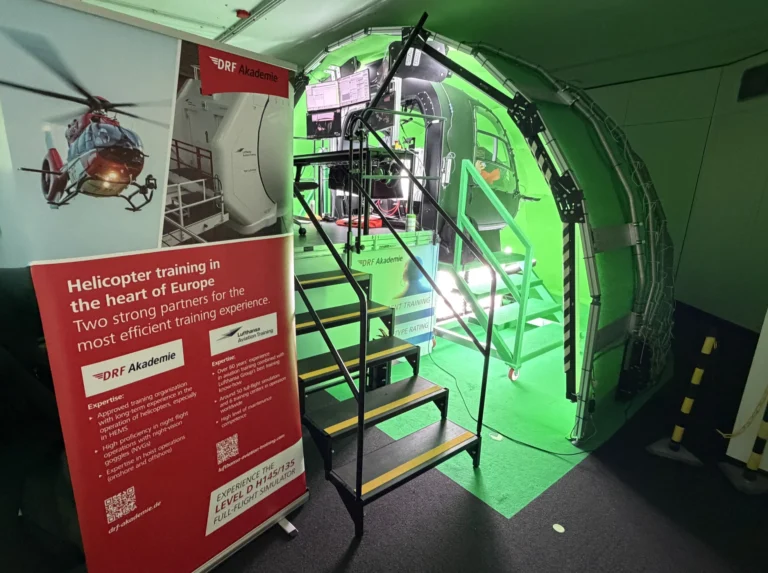
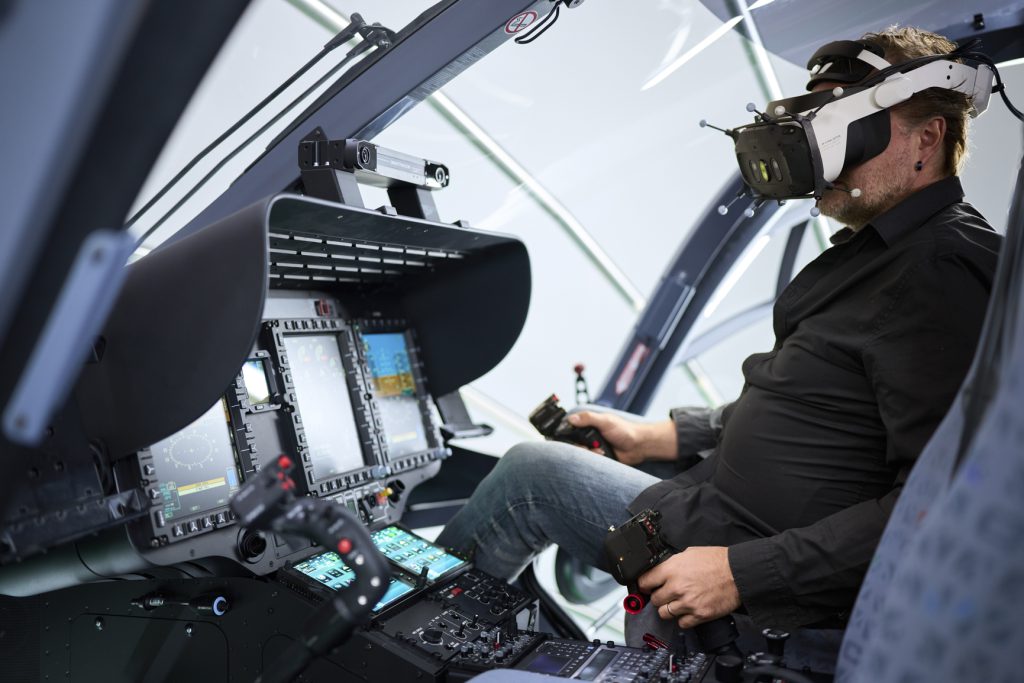
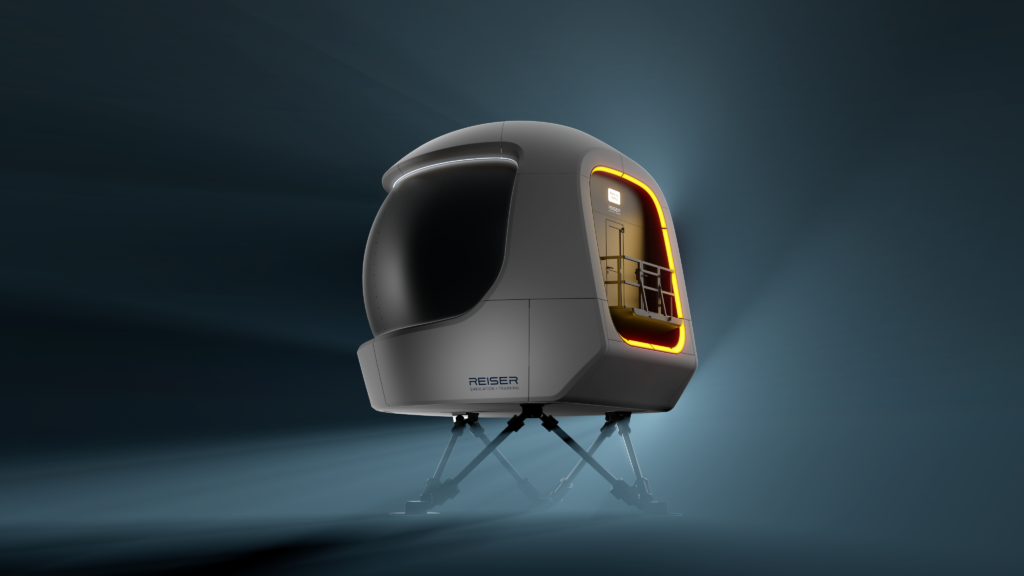
REISER's H145-XR simulator is a training device qualified as an FTD Level 3 under EASA CS-FSTD(H). It combines a physical H145 cockpit with an immersive virtual outside world presented in a head-mounted display. Lufthansa Aviation Training operates the system at its Frankfurt site.
A new simulator is only a good training solution when it can do more than work technically. It has to fit into existing processes, be accepted by crews and instructors, and reliably deliver what it was designed for in day-to-day operations.
REISER's H145-XR simulator combines a physical helicopter cockpit with an immersive virtual outside world. Lufthansa Aviation Training operates the system at its Frankfurt site. It went into operation in July 2026, after a development and qualification phase in which REISER, DRF Akademie, Lufthansa Aviation Training and the Luftfahrt-Bundesamt (German Federal Aviation Office) brought together different perspectives.
“The question is no longer: XR or full flight simulator? The more important question is: which combination of training devices leads to the desired learning outcome?”
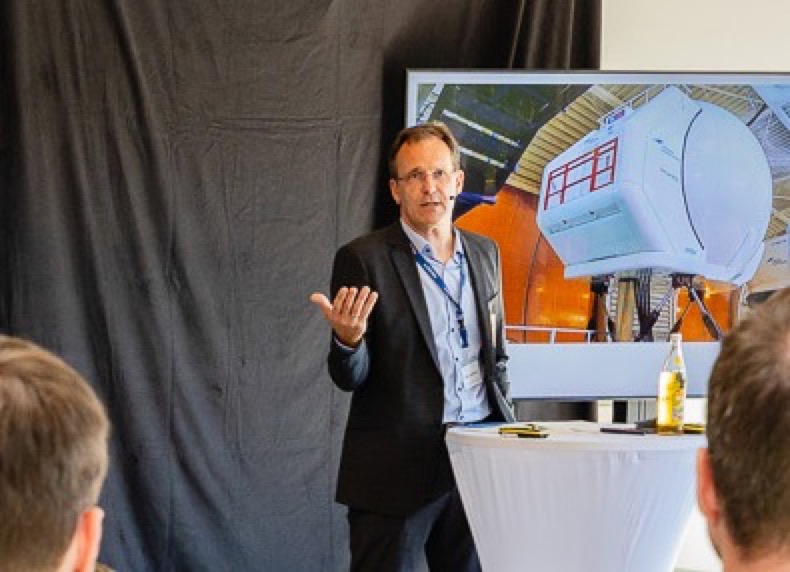
Jens Jährling, Lufthansa Aviation Training
From Development Project to Training Operations
The project was initially driven by REISER and DRF Akademie. Lufthansa Aviation Training contributed its experience as a training organization and simulator operator early in development and later took over operation of the device on behalf of DRF Akademie.
This also changed the perspective on the system. While development focused on technical implementation and qualification, the transition to operations brought other questions to the fore: How quickly can the device be prepared for the next crew? How intuitive is the operation? How well can the simulator be integrated into existing training processes? And how reliably does it perform over many training days?
Qualification as an FTD Level 3 followed EASA CS-FSTD(H) and the special verification requirements needed for XR visualization. Technical development, operational preparation and regulatory coordination therefore had to converge closely. The exchange with the Luftfahrt-Bundesamt was an important part of this process.
The Learning Objective Determines the Training Device
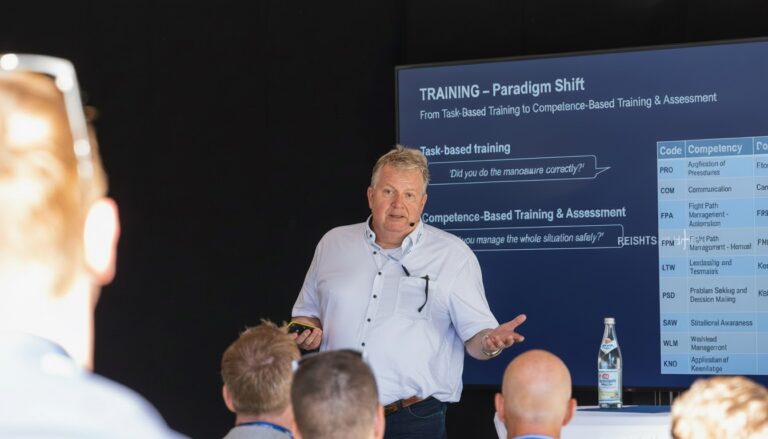
For Jens Jährling, the project marks a shift in aviation training. The choice of training device should not start with the device that happens to be available. The starting point is the question of which competency is to be trained.
This approach can be described as task-to-tool: the training task determines the appropriate medium. An XR simulator can play to its strengths where real cockpit interaction and a flexible virtual environment come together. A full flight simulator remains relevant for training tasks that require a comprehensive combination of motion, systems representation and flight behavior. FTDs, FNPTs and other training devices take on other learning steps. How REISER structures this choice is described in the tech story Aviation Training: When the Training Objective Determines the Training Device.
“We should start with the competency to be developed, define the required fidelity, and then select the most suitable training device.”
Jens Jährling, Lufthansa Aviation Training
This logic is also reflected in EASA CS-FSTD Issue 1. The new regulatory framework describes simulators more strongly in terms of concrete capabilities and their level of performance. For operators and manufacturers, this means that training objectives, device capabilities and qualification evidence must be considered earlier and more precisely.
XR for Visual References in H145 Training
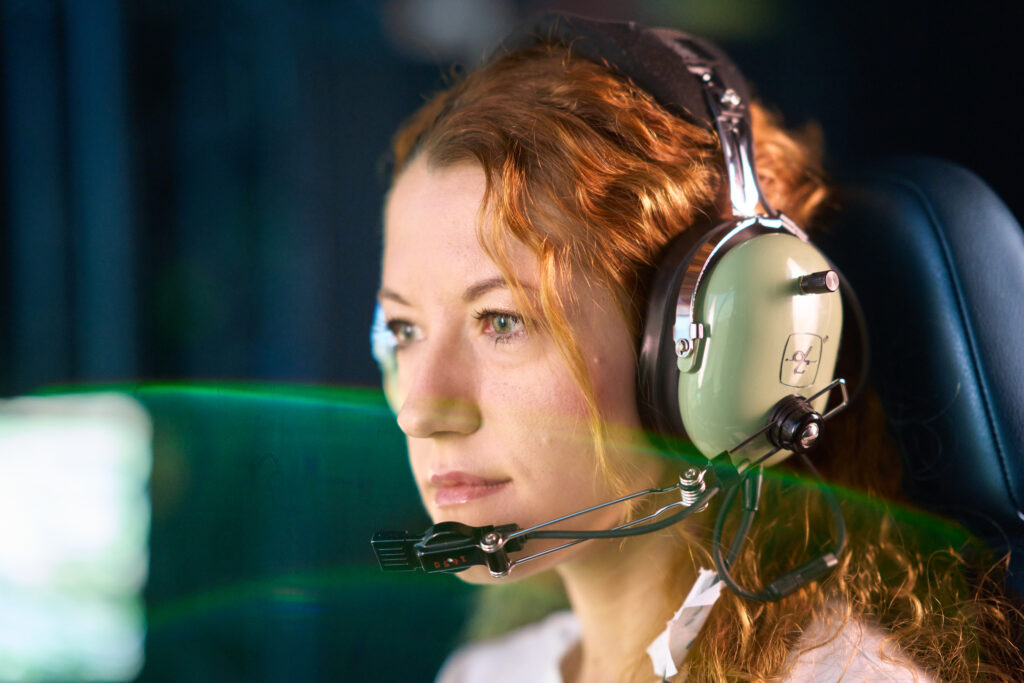
The H145-XR simulator combines a real cockpit with a head-mounted display. Pilots work with physical controls while experiencing a virtual environment that can be adapted to the respective training scenario.
In helicopter training in particular, the view outside is an essential part of the task. Height above the ground, altitude, movement and spatial orientation are captured not only through instruments but also through visual references. Jährling therefore particularly emphasizes the field of view, image quality, and the perception of distance and altitude.
Conventional projection systems reach physical limits when very large and detailed visual areas are required. In certain training situations, XR can shift these limits, especially where external references and spatial perception play a central role.
This does not mean that XR replaces the full flight simulator. The devices fulfill different tasks. The H145-XR simulator complements the training portfolio where immersive vision, real cockpit interaction and flexible virtual scenarios offer a particular added value.
Everyday Usability determines the Benefit
Daily operations show whether a technical innovation becomes a dependable training device. Lufthansa Aviation Training's first experiences are positive: calibration can be carried out comparatively easily, acceptance of the headsets is high, and users become accustomed to the system quickly.
Even seemingly small details influence training success. A headset must be adjustable for different people. For spectacle wearers, a practical solution is needed. In a professional training device, crews and courses change regularly. Ease of use, robustness and a quick changeover between users are therefore just as much part of training quality as resolution and field of view.
Before the project began, Jährling had expected more effort in the daily handling of the headsets. Experience so far paints a different picture: calibration is manageable, user acceptance is good, and the familiarization period is short. This brings to the foreground a question that is often underestimated with new technologies: how well does the system work not at the first demonstration, but in recurring operations?
Infrastructure is part of the Solution
An XR system cannot be planned in isolation from its location. Room geometry, available floor space, air conditioning, escape routes and IT connectivity all affect how reliably it can be operated.
These aspects were therefore not downstream installation topics but part of the training solution. The environment must be prepared so that the device can be used safely, stably and without unnecessary interruptions. At the same time, the simulator must fit into the existing training organization.
This experience is also relevant for later scaling. If XR systems are deployed at additional sites, it is not enough to simply duplicate the hardware. Spatial, technical and organizational requirements must also be planned in a reproducible way.
Think Qualification and Operations together
In a safety-critical industry, technical development and regulatory qualification cannot be treated as separate work streams. They must evolve together.
“In a safety-critical industry, progress and compliance must not be viewed separately. They must advance together.”
Jens Jährling, Lufthansa Aviation Training
Early dialogue with the Luftfahrt-Bundesamt helped bring requirements, technical implementation and evidence together step by step. For a new technology such as mixed reality, this is particularly relevant: the solution must not only work technically, but also have a traceable qualification path.
Responsibility does not end with commissioning. Manufacturers, operators and users continue to gather experience in daily operations. They observe how instructors and crews work with the system, which processes prove effective, and where adjustments are needed. Qualification and operational quality remain shared tasks.

Jens Jährling
Lufthansa Aviation Training
Lufthansa Aviation Training operates REISER's H145-XR simulator at its Frankfurt site on behalf of DRF Akademie. This case study is based on a conversation with Jens Jährling about the transition from development project to daily training operations.
KEY TAKEAWAYS
Lufthansa Aviation Training has operated REISER's H145-XR simulator in Frankfurt since July 2026, on behalf of DRF Akademie. The device is qualified as an FTD Level 3 under EASA CS-FSTD(H).
The learning objective determines the training device, not the other way round: start with the competency, define the required fidelity, then select the most suitable device (task-to-tool).
XR plays to its strengths where real cockpit interaction, immersive external references and flexible virtual scenarios come together. It complements the full flight simulator rather than replacing it.
Everyday usability and infrastructure decide whether an innovation becomes a dependable training device: calibration, headset acceptance, changeover between users, room, climate and IT.