
His core message: mixed reality will not replace full flight simulators. It complements proven devices and makes high-quality training possible where scalability and availability matter most.
Why Simulation Needs to Scale
Crews can repeat weather conditions, system failures and demanding scenarios in a simulator without risk. This includes ship landings and winch operations, which are expensive or dangerous in a real aircraft.The challenge is scale. Full flight simulators are large, permanently installed systems. Desktop trainers and standalone VR applications are flexible but offer limited realism. The project aimed to keep the effectiveness of a high-quality device and make it considerably more scalable.
Physical Cockpit, Virtual Outside World
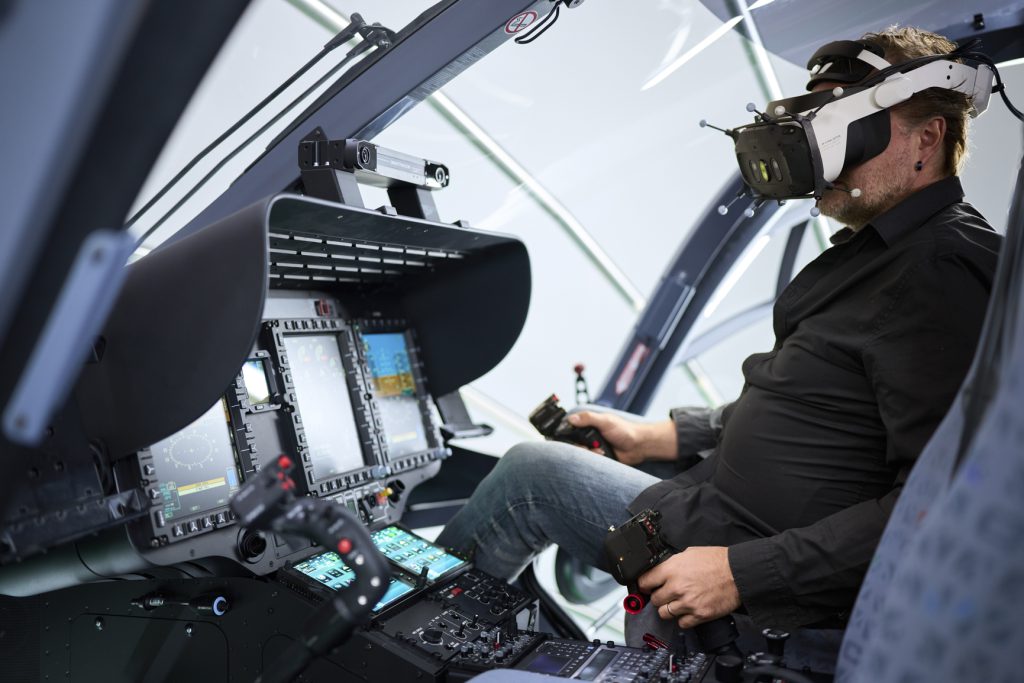
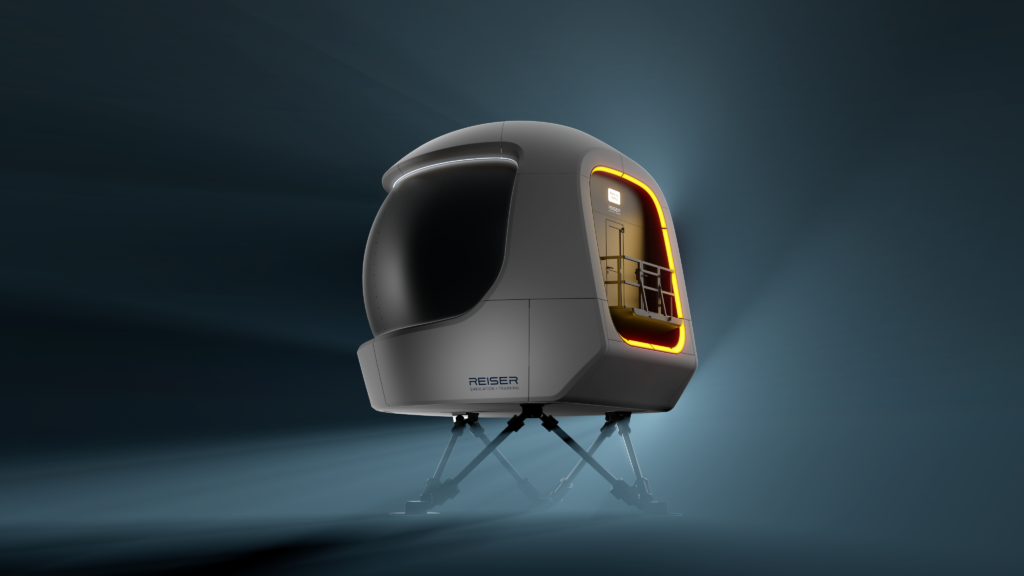
Pilots work with real controls, switches and instruments. For the view outside the cockpit, they wear mixed reality headsets instead of a conventional visual system. They still see the physical cockpit, their own hands and their crew partner.This keeps physical interaction intact, which matters for coordination in a multi-crew cockpit. A modular architecture also lets cockpit configurations be exchanged within a shared infrastructure. The device is qualified as FTD Level 3, which corresponds to FAA Level 7.
Qualification Under New Rules
The relevant EASA specification dates from 2012 and does not cover mixed reality. Together with the German Federal Aviation Office (Luftfahrt-Bundesamt), REISER defined objective verification methods. They cover latency, field of view, resolution, brightness, colour reproduction and dark scenes.No suitable measuring equipment existed, so REISER developed it with partners. The result is a qualified device and clear conditions for demonstrating compliance.
What the Pilots Said
Pilots, test pilots and instructors from DRF Luftrettung evaluated the system. It is not a large scientific study. Even so, all 14 pilots rated the system good to very good. Depth perception stood out in particular. Low-level flight, autorotation, instrument approaches and malfunction handling also received strong ratings.The biggest gap is the missing touchdown cueing. REISER treats this as an engineering question: how much motion does a training objective actually need? Targeted cues such as vibration or touchdown feedback could be enough. A full six-degree-of-freedom motion platform may not be necessary.
More Than a Visual System
The headsets track where the pilot looks. Instructors receive objective data on visual scan behaviour. Night vision capability and additional motion cues are in development. The approach is also being studied for fixed-wing aircraft.
Tools for Different Training Goals
Different training goals require different tools. Full flight simulators keep capabilities that smaller devices cannot offer. Where effectiveness can be shown objectively, mixed reality makes high-quality training more modular, accessible and scalable.For Dr. Hain, qualification is the decisive step. New technology matters for aviation training only once its performance has been measured, demonstrated and recognised within the regulatory framework.The task, therefore, is not to make simulation simply more virtual. It is to make training more effective where it is needed, more scalable where it is possible, and measurable throughout.Type your paragraph here