KEY TAKEAWAYS
ARTE is a joint research project of REISER and DLR, funded under the aviation research programme LuFo Klima VII-1.
The goal is an AR/MR flight simulator in which pilot and flight instructor train multi-crew coordination together.
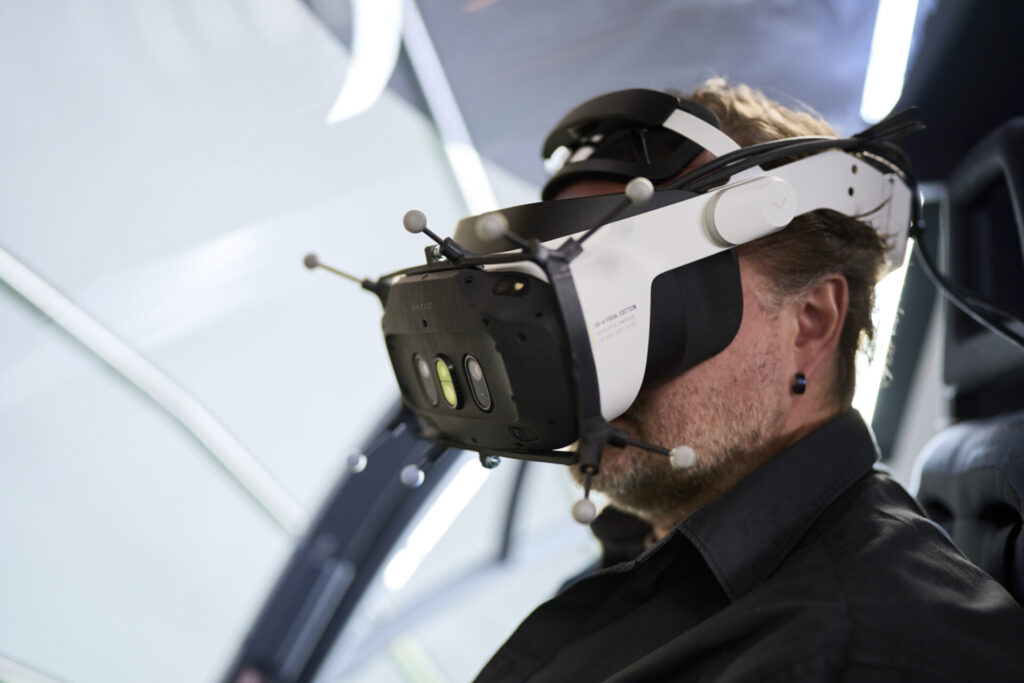
The instructor operator station moves entirely into the flight instructor's mixed-reality headset.
Eye tracking and physiological sensor data supply performance metrics while the exercise is running.
Where MCC training reaches its limits
Modern helicopter operations are teamwork. Flying as a crew means sharing attention, tasks and decisions, and it is exactly this coordination that decides the outcome in air rescue or on operations. Until now it has been trained mainly in real flight or in the full-flight simulator.
Both are expensive, and the real training flight is emission-intensive on top of that: a medium helicopter produces around 632 kg of CO2 per flight hour. An AR/MR simulator would be the step in between, more mobile and less costly than a full-flight simulator, closer to the cockpit than a desktop trainer. So far, however, it could not bring a second person into the picture.
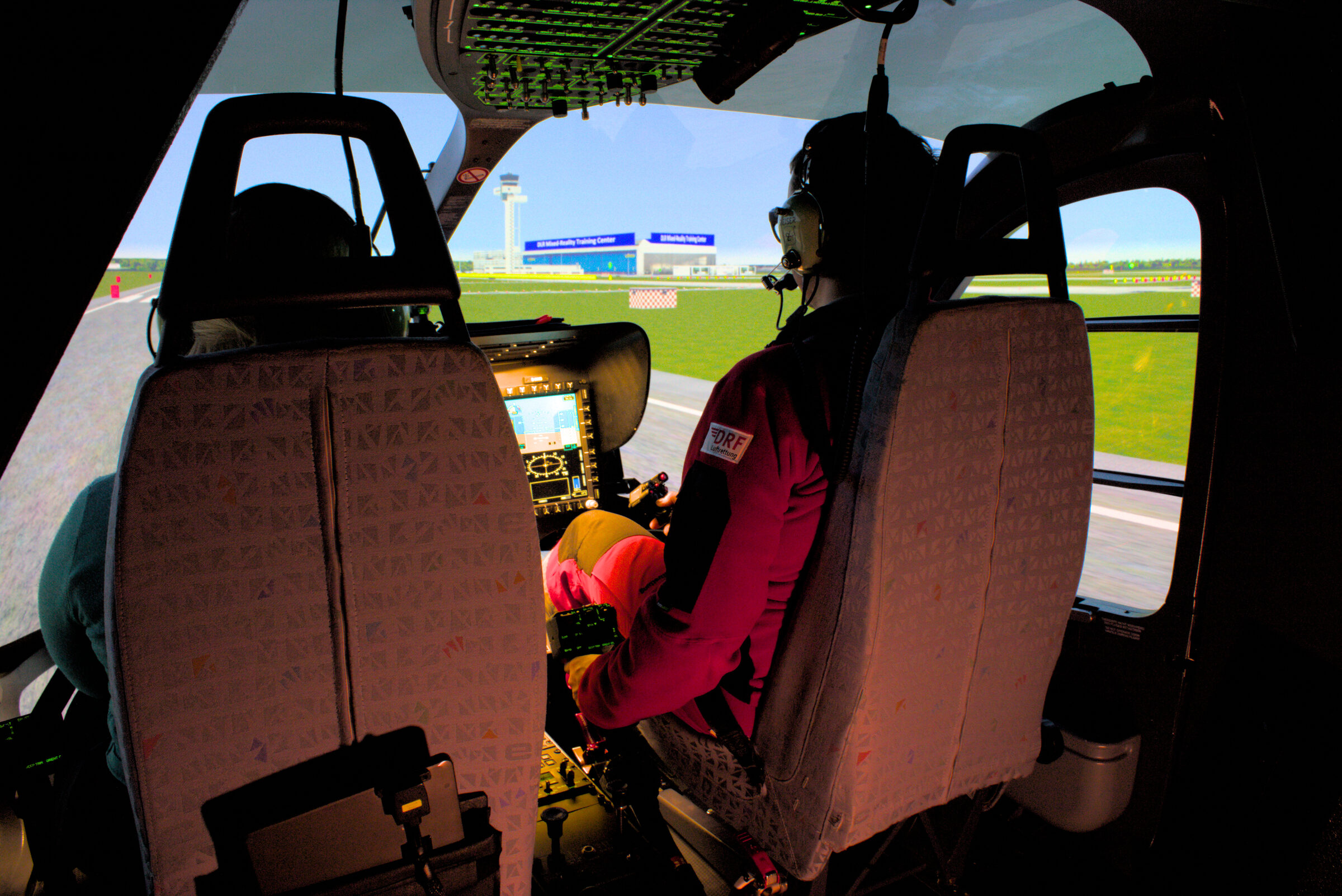
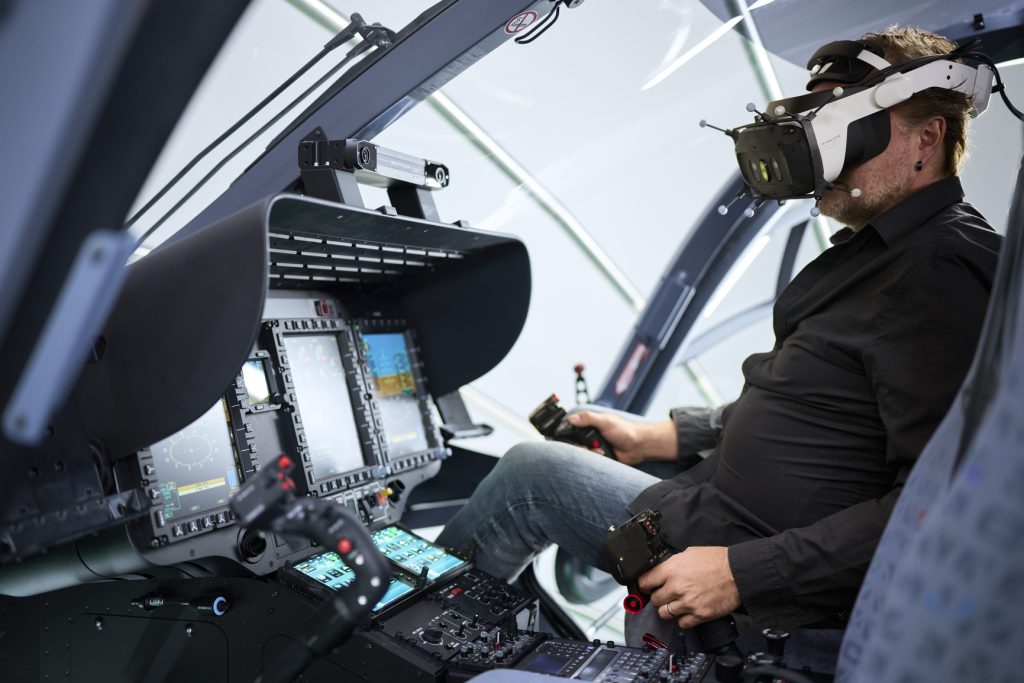
Multi-crew training in the helicopter simulator, the starting point for the AR/MR extension. Image: DLR
The instructor station moves into the headset
Traditionally the flight instructor sits at an instructor operator station beside or behind the simulator and controls weather, malfunctions and scenario from there. In ARTE we build this station entirely virtually and render it in the instructor's mixed-reality headset. The flight instructor therefore sits next to the pilot as in the real cockpit and still keeps control of the simulation.
In technical terms that means a second MR headset on DLR's existing ARiTra research simulator, shared tracking of both fields of view and a user interface that works within the field of view without blocking the view of the pilot. A device for a single pilot thus becomes a multi-crew trainer.
Project partners
REISER Simulation and Training and DLR
Scientific supervision
DLR Institute of Flight Systems, Braunschweig
Funding programme
LuFo Klima VII-1
Funding reference
20Q2417
Duration
January 2026 to July 2028
Metrics and the road to qualification
The second innovation sits in the evaluation. Eye tracking shows what a crew looks at and when, physiological sensor data indicate workload and attention. Both feed live performance metrics that take pressure off the flight instructor and make feedback verifiable instead of resting on observation alone. An AI-supported method handles the evaluation.
The final question is whether such a device can be qualified to EASA and FAA standards. ARTE assesses exactly that. The findings then flow into the further development of certifiable AR and MR simulators, that is, into systems we build and deliver.