
Today, alongside landing training, it is also possible to complete training for emergency situations that cannot be practised in real flight operations.
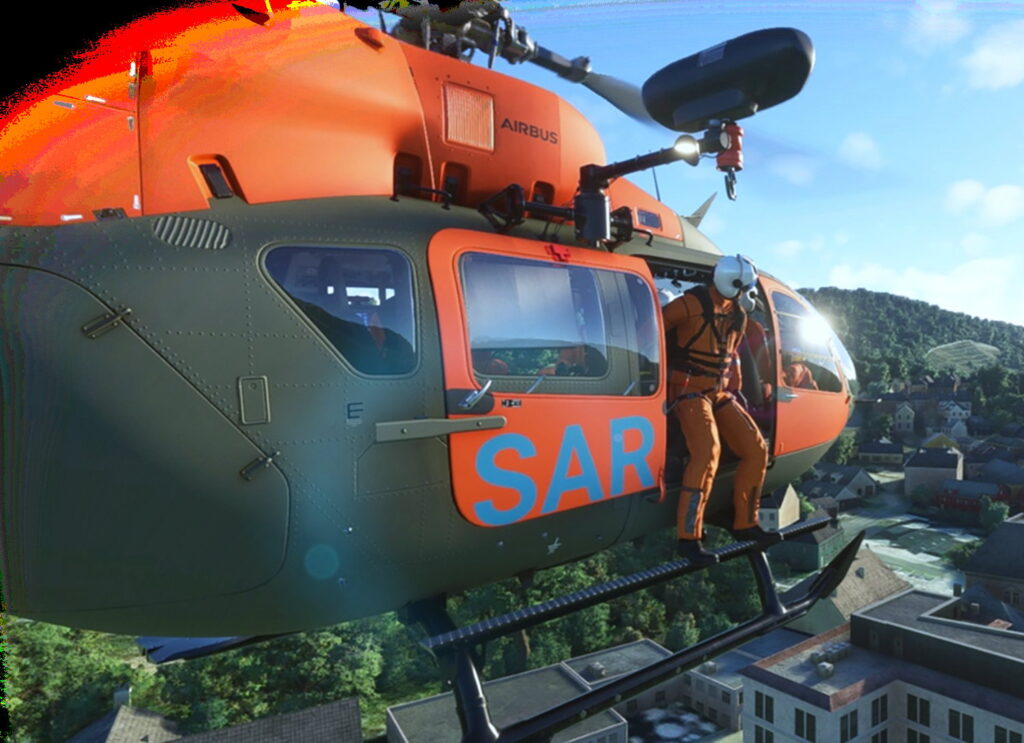
Flight simulators are used equally for fixed-wing aircraft and for helicopters. In helicopter flying in particular, simulators are hugely important because of the very wide and complex range of missions (external load transport, search and rescue, hoist rescue, for example), preparing pilots for their missions as well as possible. Helicopter simulators have to cover a very broad training field in order to meet the needs of the market.

Today’s helicopter simulators, used for the professional training, practice and testing of pilots, have to meet and be qualified against EASA’s CS-FSTD(H) (Certification Specifications – Flight Simulation Training Devices for Helicopter) requirements in Europe. CS-FSTD(H) divides the various training devices into classes and levels which, in terms of the fidelity and quality of the simulation and also in terms of technical complexity, can be listed in ascending order as follows.
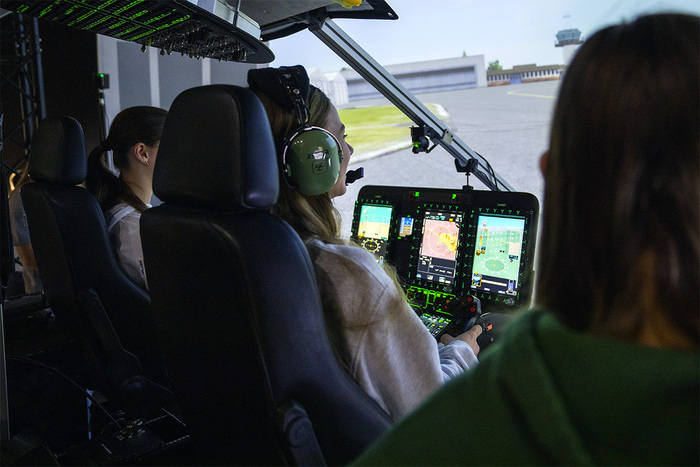
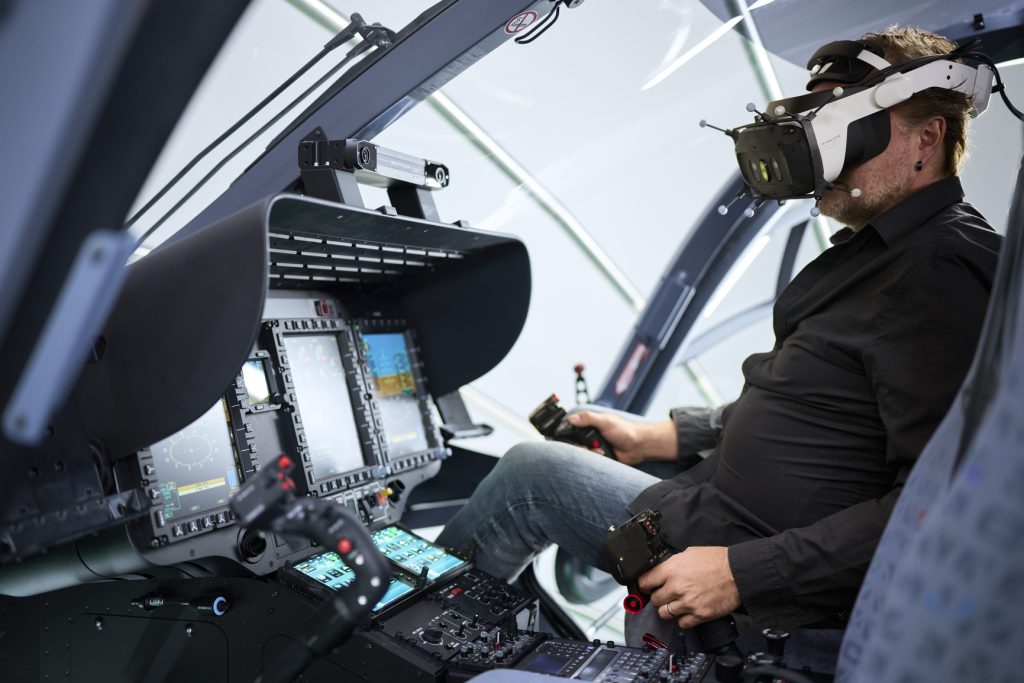
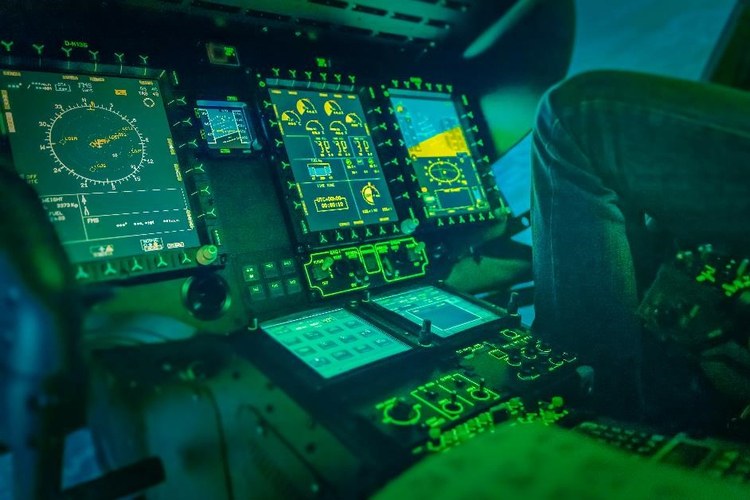
CS-FSTD(H) specifies not only which subsystems a simulator must have, but also what quality each subsystem must achieve. The cockpit is a good illustration. A Flight and Navigation Procedures Trainer (FNPT) requires a generic, type-unspecific cockpit with a minimum of the equipment needed for flight and navigation. An FFS, by contrast, requires a cockpit that replicates the original helicopter type 1:1 in terms of geometry and avionics equipment and functionality.
Figure 1: cockpit hardware of the H145 full-flight simulator
The FNPT is the lowest class of simulator and is used primarily for basic pilot training. An FNPT does not have to be type-specific, although the individual system components must meet the characteristics described below. An FNPT has a simple visual system and a generic cockpit, a generic flight, sound and force model and generic system behaviour.
FNPTs serve primarily for basic and refresher training. They allow standard and safety procedures to be trained, as well as emergency procedures and instrument flight. FNPTs can also be qualified with multi-crew coordination (MCC) capability, which allows crew coordination to be trained.
A Flight Training Device (FTD) is the middle class of the three simulator types. Compared with the FNPT, an FTD is type-specific. The FTD therefore requires a complete, full-scale replica of the cockpit, instruments and equipment of a particular helicopter type. The fidelity of the system behaviour, for example the flight and sound models, varies across the different FTD levels from generic to type-specific. In addition to the capabilities of an FNPT, an FTD allows type-specific procedures to be trained and is used, among other things, to prepare pilots for new helicopter types and for type ratings.
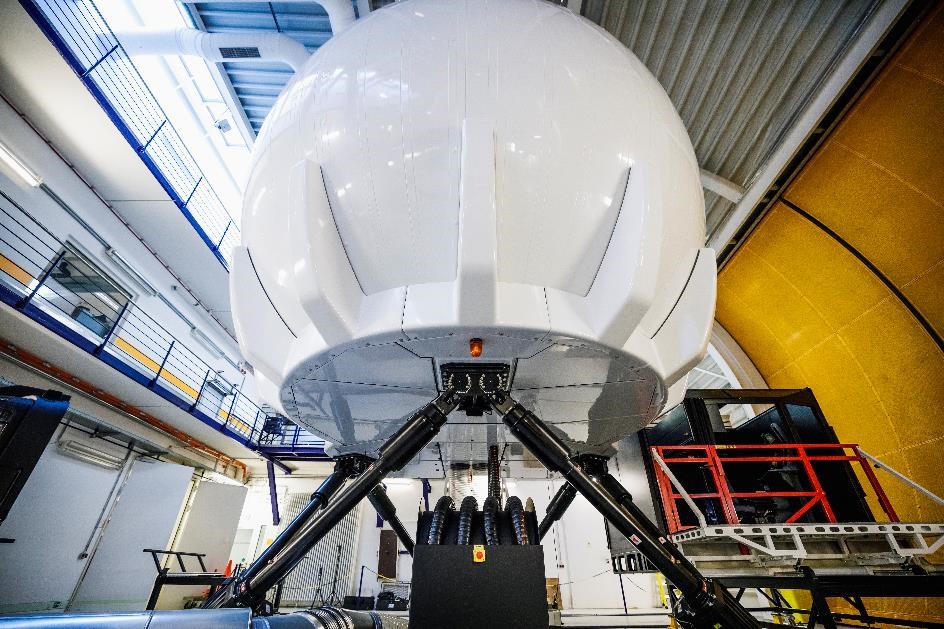
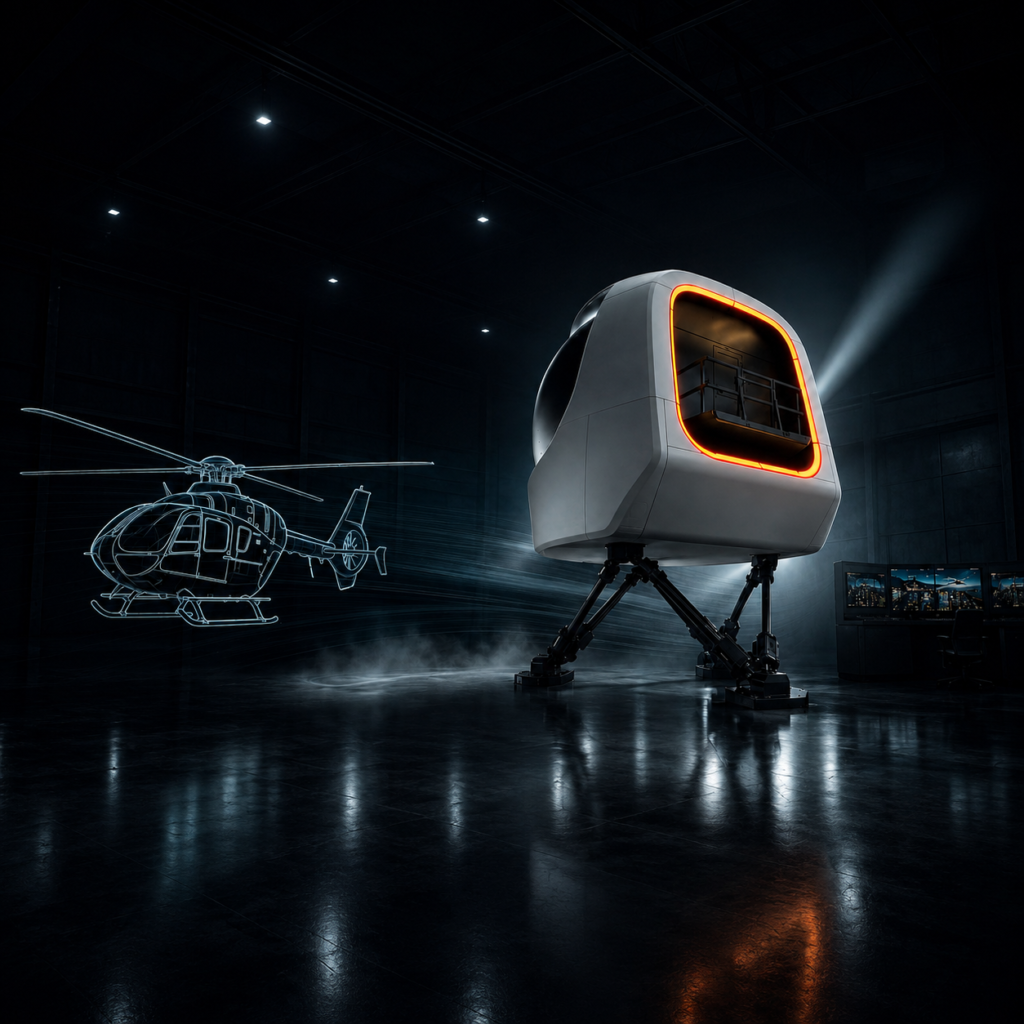
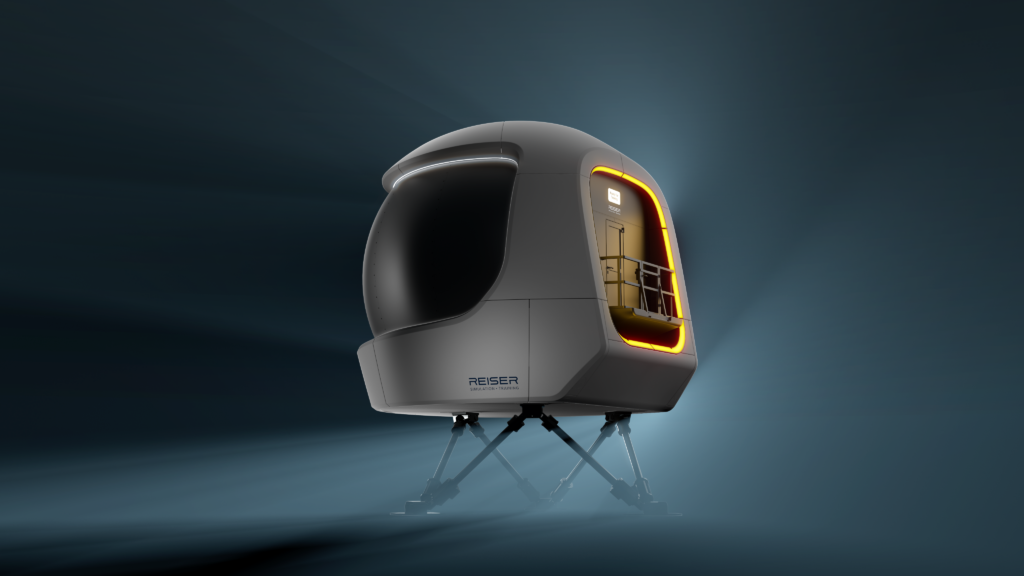
Figure 2: full-flight simulator with motion system
The top end in terms of performance and simulation fidelity is the FFS. Compared with the FTD, an FFS additionally has a vibration platform and what is known as a motion system. The vibration platform simulates the mid-range frequencies while the motion system simulates low-frequency accelerations.
The projection area of the FFS visual system, larger again than the FTD’s, further increases realism in combination with all the other systems. In the FFS the pilot barely notices the difference from a real flight and is therefore immersed in the simulation with all their senses. This is also called simulation immersion. In addition to the capabilities of an FTD, an FFS therefore allows performance and proficiency checks to be carried out.
Depending on the FSTD class, certain parts of the training can be moved from the real helicopter to the simulators, which produces very large cost savings, especially with expensive aircraft.
To illustrate the differences between the individual FSTD classes and levels, the following table gives examples of how some subsystems differ across the three classes:
Flight model
FNPT
Generic flight model with the effects of changes in aerodynamics and environment at the various combinations of airspeed and power that normally occur in flight.
FTD
Sufficient aerodynamic and environmental modelling of the respective helicopter type.
FFS
Tailored to the respective helicopter type.
Cockpit and equipment replication
FNPT
Functioning instruments in a spatially correct position.
FTD
A full-size control panel of the replicated system with functioning, highly accurate controls and switches and lighting of the panels and instruments for the operation to be carried out.
FFS
An enclosed, full-scale replica of the helicopter cockpit with representative pilot seats, including simulation of all systems, instruments, navigation equipment and communication, warning and caution systems.
Cockpit and equipment replication
FNPT
Functioning instruments in a spatially correct position.
FTD
A full-size control panel of the replicated system with functioning, highly accurate controls and switches and lighting of the panels and instruments for the operation to be carried out.
FFS
An enclosed, full-scale replica of the helicopter cockpit with representative pilot seats, including simulation of all systems, instruments, navigation equipment and communication, warning and caution systems.
Visual system
FNPT
150° horizontal and 40° vertical.
FTD
150° horizontal and 60° vertical; night scenario possible.
FFS
180° horizontal and 60° vertical; night scenario possible.
Sound and tones
FNPT
Functional
FTD
Realistic engine and rotor sounds.
FFS
Realistic engine and rotor sounds.
Vibration
FNPT
No
FTD
No
FFS
Yes
Vibration
FNPT
No
FTD
No
FFS
Yes, with at least three degrees of freedom (pitch, roll and yaw).
Helicopter simulators of the classes described above are qualified in Europe to EASA’s CS-FSTD(H) standard. The training devices have to meet defined criteria and tests. The requirements to be demonstrated are evidenced by what are known as Qualification Test Guide (QTG) tests. This is a document that describes all necessary tests (QTG tests) for the FSTD to be qualified and documents the results.
The QTG tests fall into two categories, subjective and objective. In the subjective tests the behaviour of the simulator is checked from the pilot’s point of view. Subjective impressions, such as the pilot’s feel for the haptics and the flight behaviour, are the focus here. In the objective QTG tests, concrete measurements are taken for a wide range of values, for example the force curves of the controls or the rotor torque during different phases of flight. The test results are compared with what is known as validation data (recorded flight data) to determine whether the values lie within the specified tolerances.
For the initial qualification of an FSTD, the simulator operator, working with the qualifying authority, produces what is known as the Master Qualification Test Guide document. This document serves on the one hand to document the test results under the CS-FSTD(H) qualification specification, and on the other as the basis for comparison for the repetition of all QTG tests by the simulator operator, staggered over a year, as evidence for the annual re-qualification.
EASA is currently revising CS-FSTD(H) with regard to the shape and variety of the future classes of flight simulator. The three classes with their ten levels in total are to give way to what is known as the FSTD Capability Signature (FCS). Under the FCS, simulators will be defined by 12 characteristics, or 13 for helicopters, each with four different levels. The levels are described as follows in ascending fidelity: N – not applied / G – generic / R – representative / S – specific.
This approach produces an enormous number of different technical configurations of flight simulator (67.1 million theoretical permutations in the case of helicopters). This diversification is intended to allow operators and simulator manufacturers to tailor simulators precisely to the requirements of the training in question. It will certainly change the range of flight simulators available considerably. It is to be expected that fewer simulators comparable to large, complex and expensive FFS will be needed in future, and that more smaller, less complex and therefore more affordable simulators will be built.
Alongside this change driven by regulation, technological progress is of course also pushing the world of simulation forward. A major change is expected above all from the use of virtual and mixed reality (VR/XR) technology. VR/XR devices are becoming ever more capable and are opening the way to professional use in flight simulators.
Using XR headsets, for example, makes it possible for a simulator to do without the large, heavy and expensive visual system consisting of projectors and projection surface. That alone significantly reduces the weight and complexity of the simulator hardware. The demands on the infrastructure are much lower too, which opens up entirely new possibilities.
It is already foreseeable today that the use of this technology will strongly influence the world of flight simulators in future. The first demonstrators for flight simulators with VR/XR technology are already available.
If you would like to learn more about the use of VR/XR technologies in simulators, we are happy to point you to our article “The virtual world”.
Florian Bayerlein
Junior Project Manager