
How Sebastian found his passion, the story behind his biplane and how the German championship works, you can read in his article on our website.
Backstory
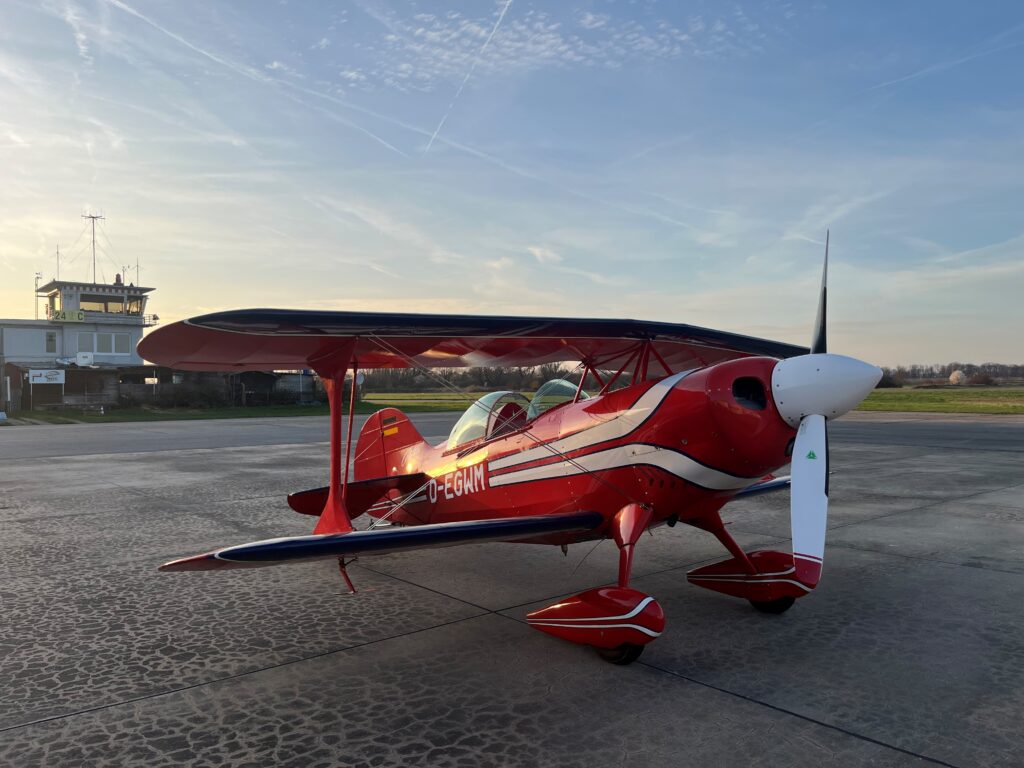
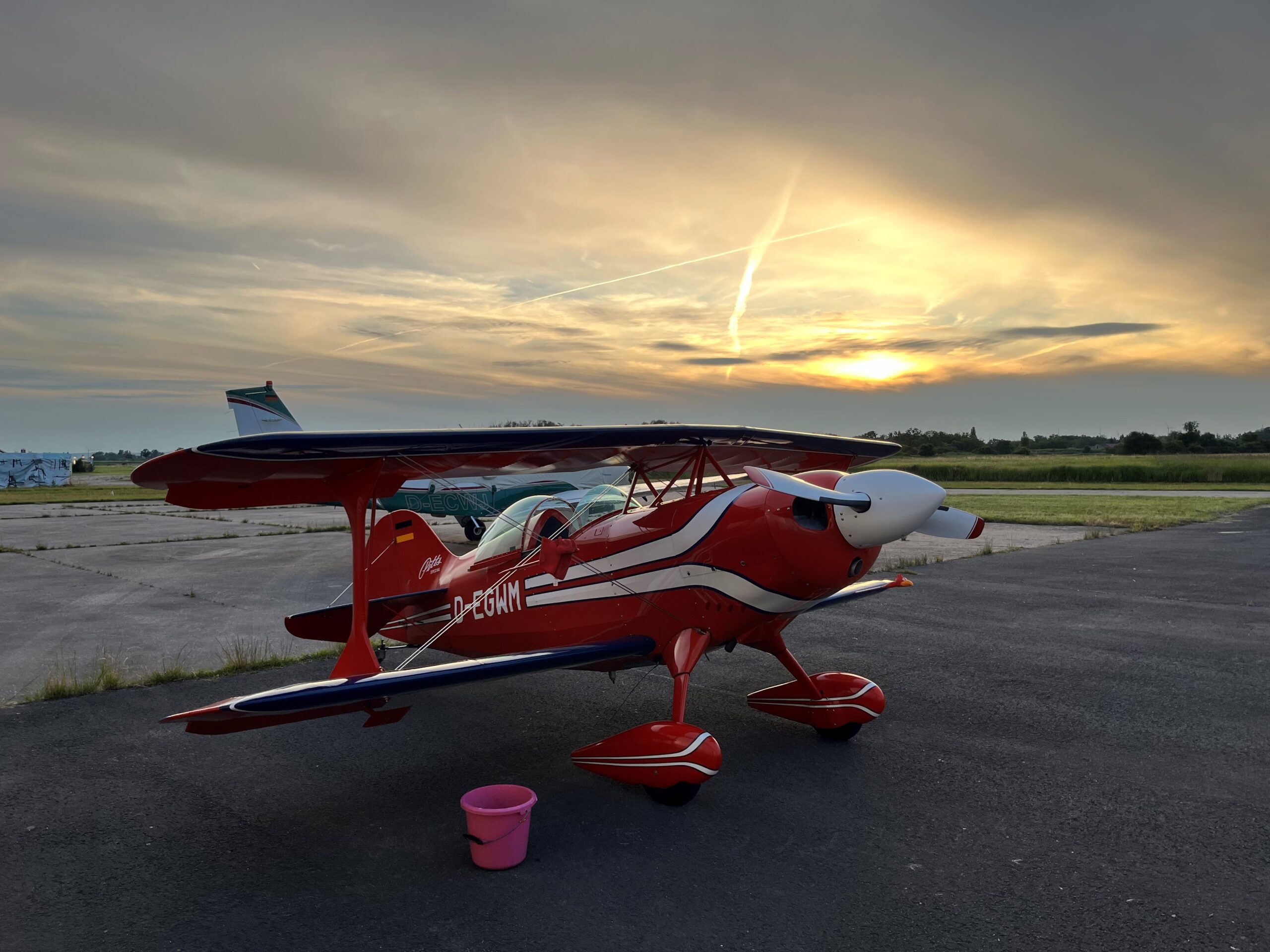
About 11 years ago I discovered this biplane, built in 1981 from a kit by two German engineers, under a thick layer of dust in a hangar at Worms airfield. After some research I managed to track down the owner and discuss the future of the aircraft with him. The Pitts had been struck off the register by the German Federal Aviation Office in 2011 after the annual airworthiness review was not carried out in time. Fortunately the registration painted on the fuselage and wing had not been reassigned and could be reserved for a return to the register. But a few more years were to pass before that happened. Only in early 2020 was the owner able to part with it emotionally and offer it for sale.
What followed was a strip-down and a proper inspection of every part. It quickly became clear that some fairly costly investments were needed. Among other things, the cylinder walls were bare, a sign that the engine had not been broken in carefully. Normally you should see a clearly visible cross-hatched hone pattern here, which both reduces friction and ensures heat is carried away. The cylinders had to be overhauled, along with new tyres, tubes, an overhaul of the constant-speed propeller, a new radio and transponder and many, many other details.
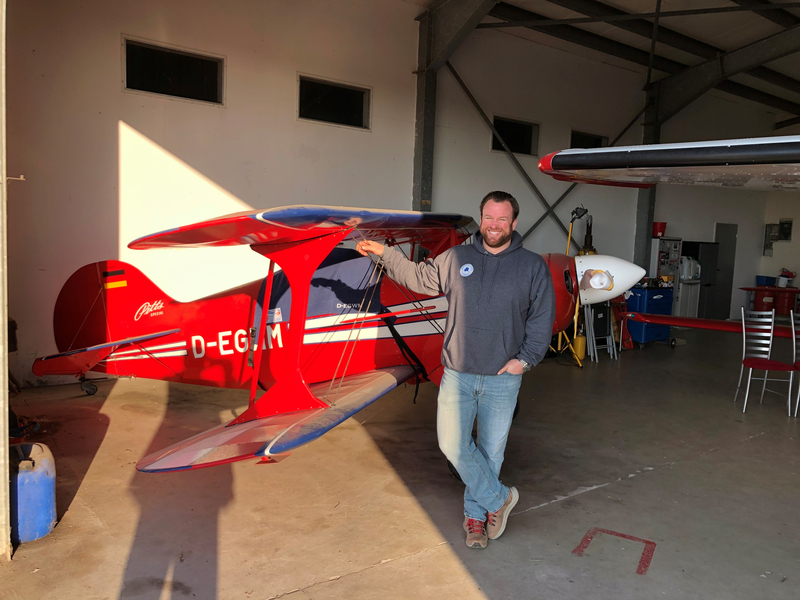
The Pitts Special
The Pitts Special is an aerobatic biplane developed by Curtis Pitts (1915–2005). It is built in traditional mixed construction, that is, a welded steel-tube fuselage and wooden wings. The first design work on the original version began as early as 1942. The maiden flight took place in 1945, with an engine of just 55 hp. The empty weight was around 500 lb (about 227 kg).
The Pitts Special is the epitome of the aerobatic biplane. The first aerobatic monoplane to come close to the performance of the Pitts was the Yakovlev Yak-50. Since its first flight in 1945 the Pitts has hardly changed, apart from more powerful engines and a few aerodynamic improvements to wings and control surfaces. Curtis Pitts had previously built numerous monoplanes for air racing. The Pitts Special was initially built as a one-off. The single-seater had only 55 hp, yet it was still capable of aerobatics. After a 90 hp engine was fitted, aerobatics became increasingly enjoyable. In 1947 he finally built the second biplane, Little Stinker, with 85 hp, which the American aerobatic pilot Betty Skelton bought from him on the spot and with which she won numerous titles up to 1950, establishing the fame of the Pitts. From then on the Pitts plans were highly prized in the homebuilt scene.
Only in 1971 was the S2A, the two-seat Pitts, developed (Big Stinker), which at 203 hp felt a little tame compared with the smaller S1 of the day at 182 hp. It took the S2B, with a six-cylinder engine of 8.9 litres producing 260 hp, to deliver a feel comparable to the S1.
Certified versions of the compact Pitts Special are still built by Aviat in Afton, Wyoming. The single-seat S1T and S1-11B versions are now made to order only. Plans for the S1S and S1-11B versions can still be bought from Aviat, however. Only the two-seat S2C with 260 hp and a span of about six metres is still available off the line.
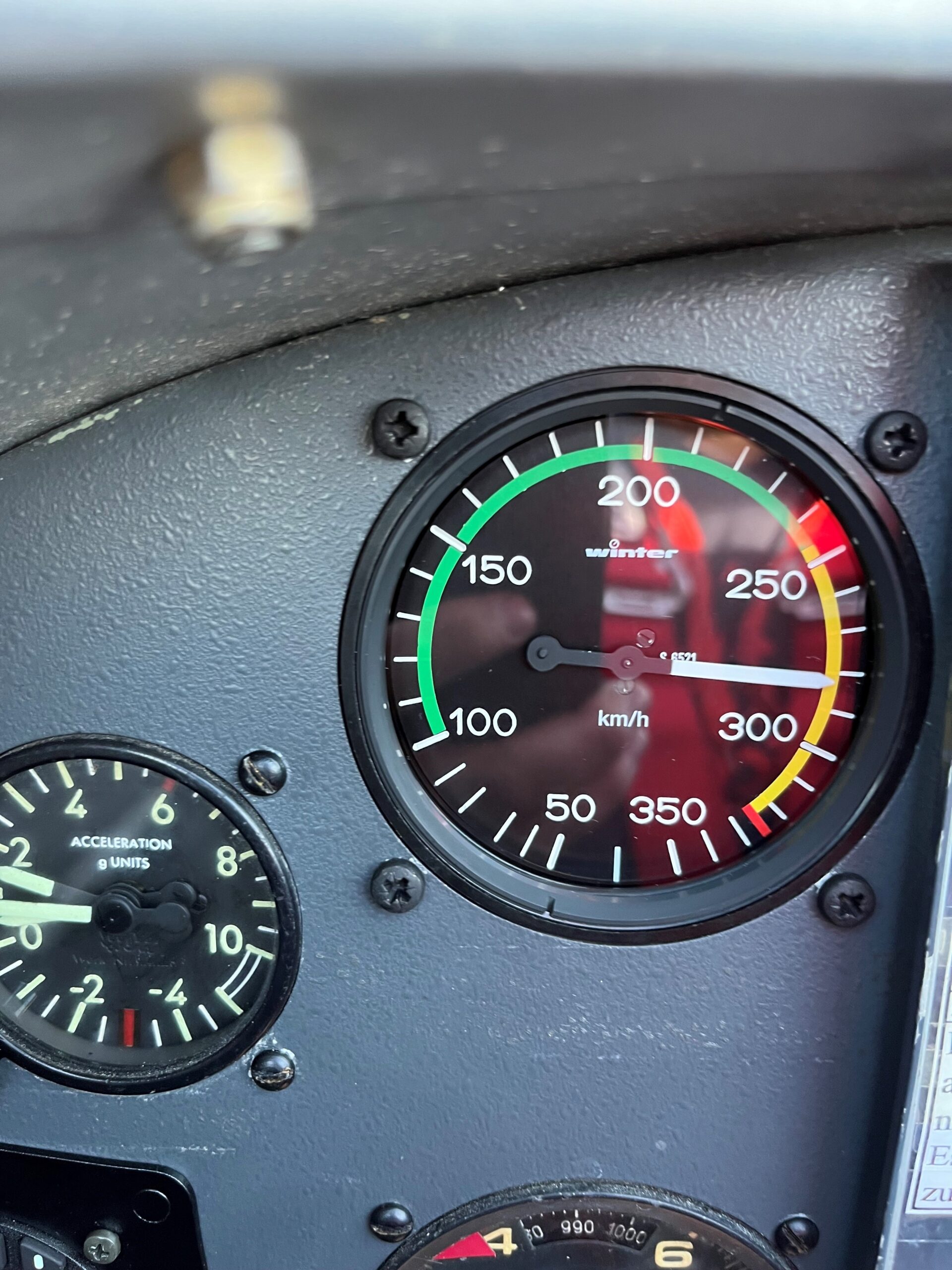
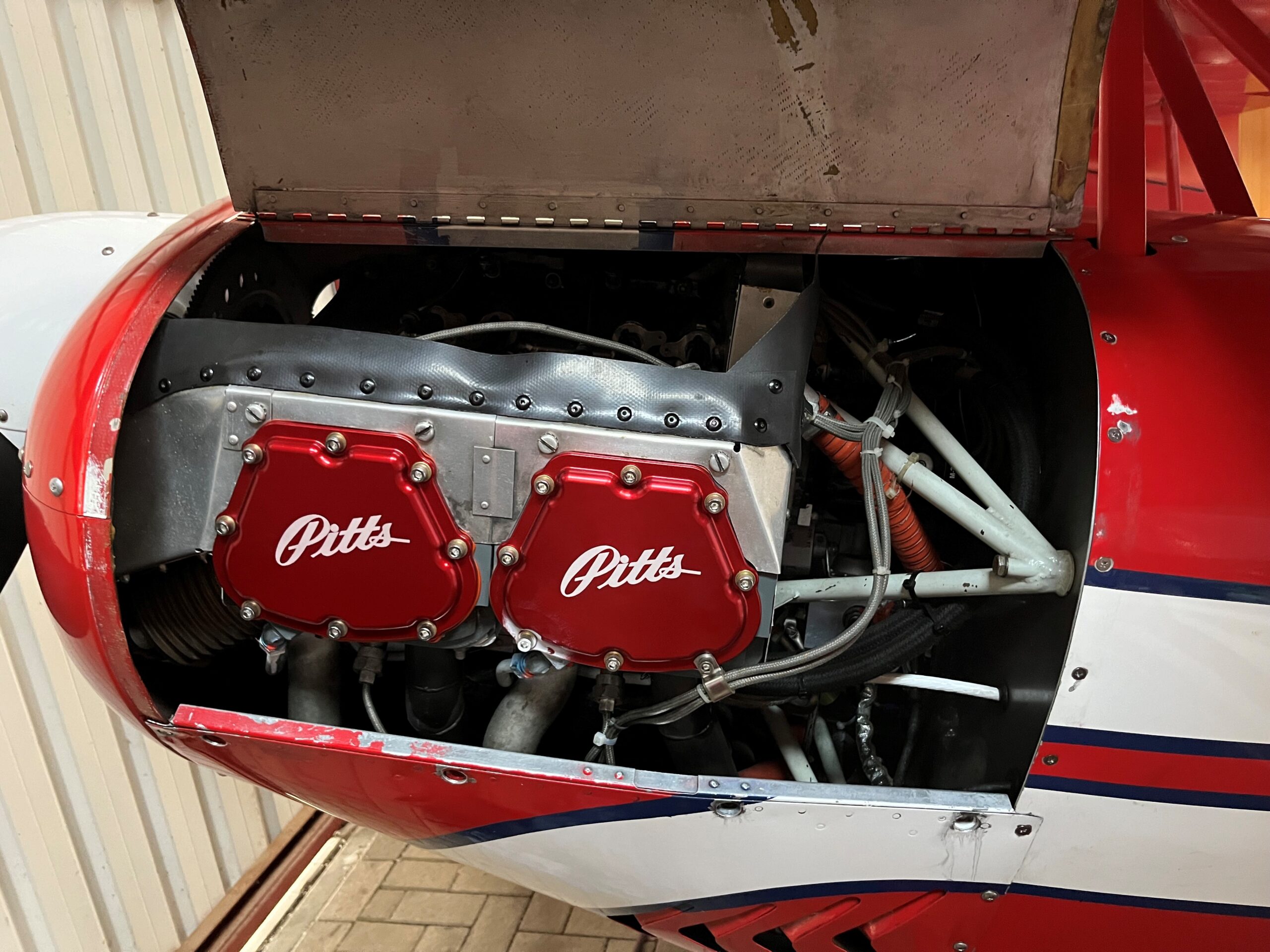
The Pitts S-1S I fly myself has an air-cooled four-cylinder Lycoming boxer engine of 5.9 litres and more than 200 hp. The empty weight is around 380 kg and in level cruise at 75 % it reaches about 150 kts (around 278 km/h).
Airworthy again at last
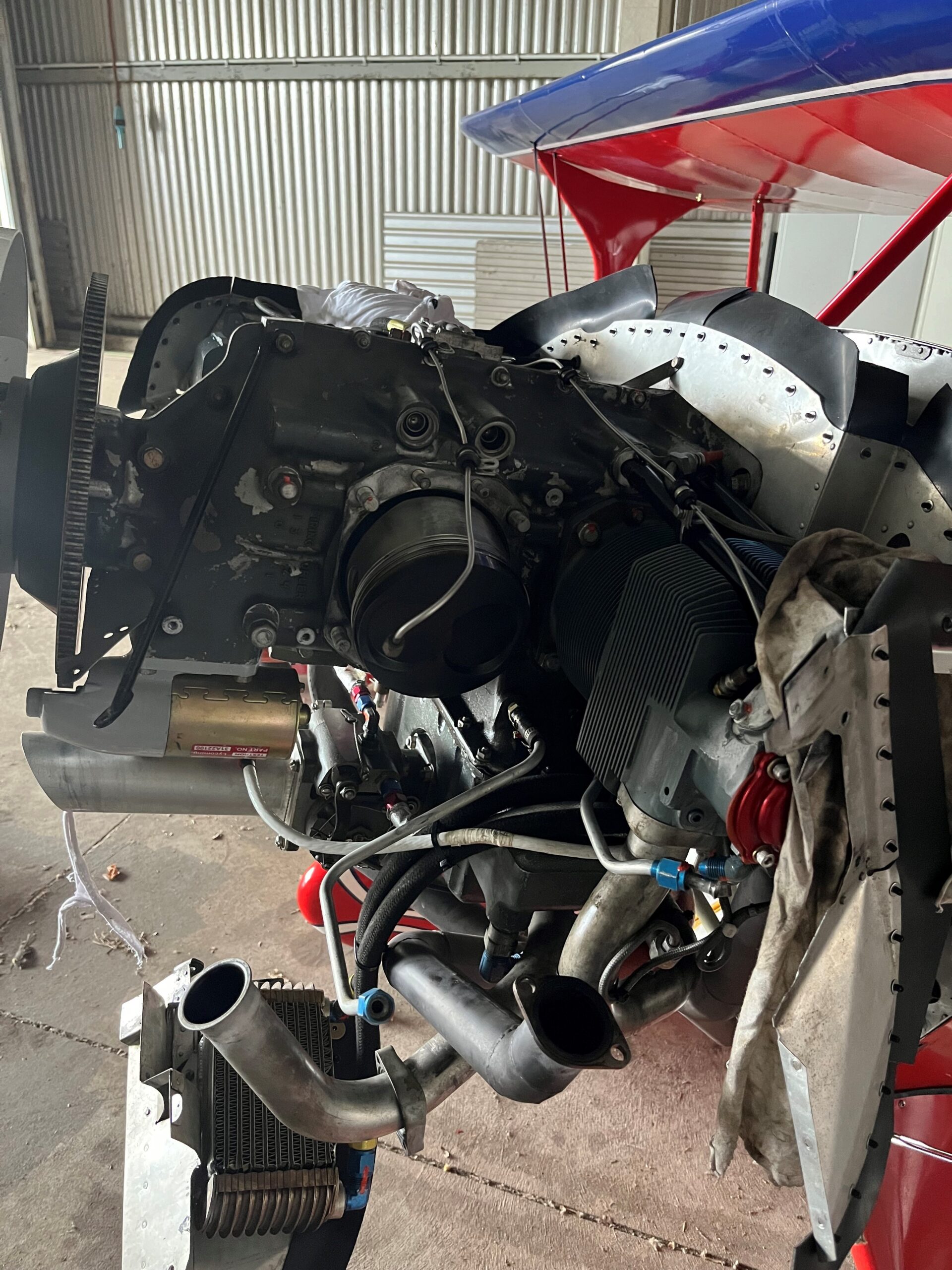
At the end of 2023 the time finally came and the Pitts took to the air again, although weather meant the ferry flight back to Worms had to wait until the end of February 2024. Unfortunately that first real test immediately revealed damage to the left front cylinder, which caused a considerable loss of oil. What caused the damage can no longer be traced, but it could not be ignored, so the cylinder had to go back to the specialist workshop for rework.
In mid-April I was finally able to start breaking the engine in. The engine manufacturer specifies at least 75 % constant power for the first 25 flight hours, using a special non-alloyed run-in oil.
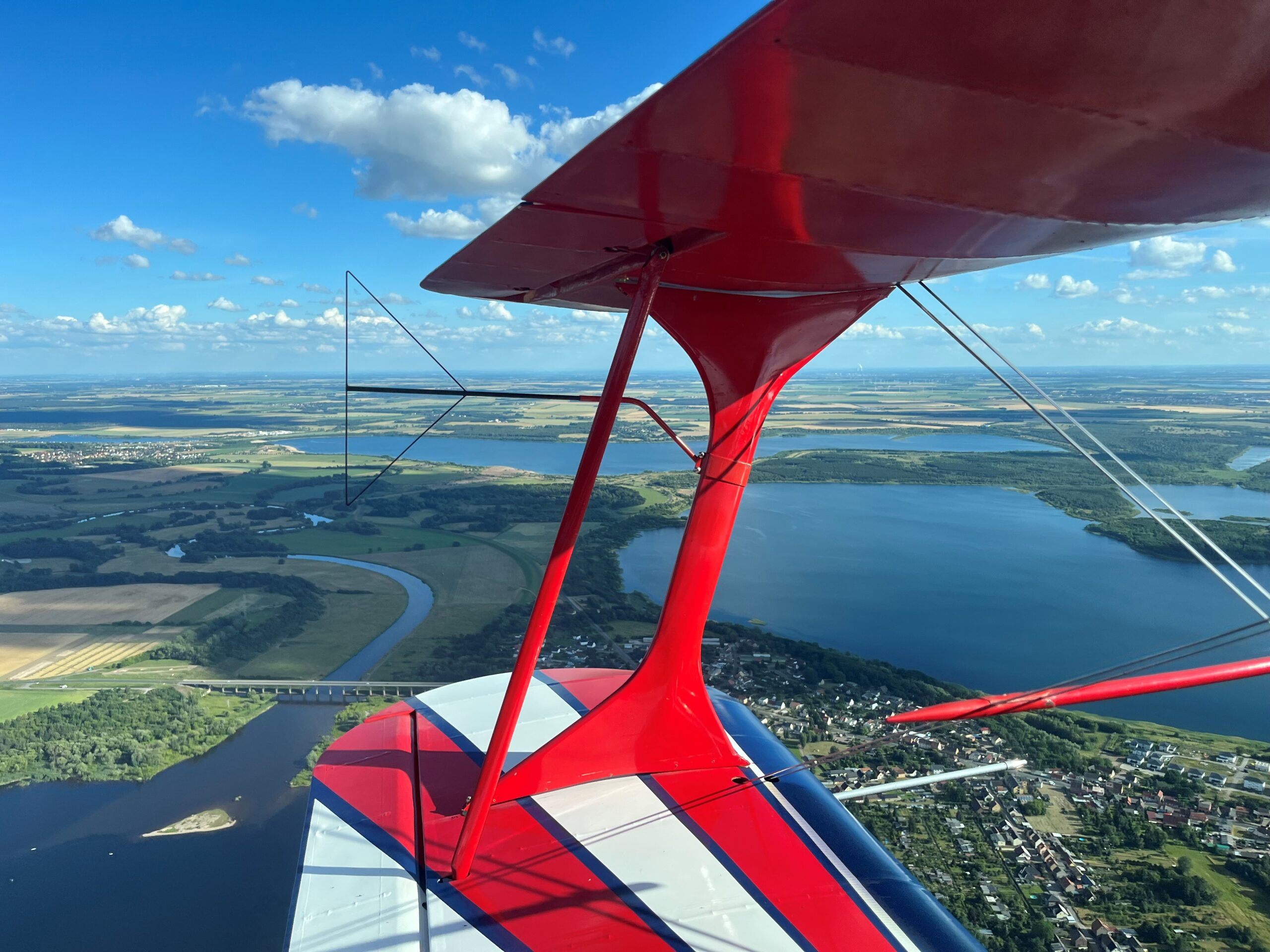
In week 24 of this year a small aerobatics training camp took place in Reinsdorf, at the south-western edge of Berlin, where the system and I could once again be put through our paces for what awaits me two weeks later in week 26: the German Aerobatics Championship.
The German aerobatics champion is decided in four different classes. I am competing in the Sportsman category. I have no great expectations of winning, as I still have too little experience on the Pitts. But I hope to present the aircraft cleanly and precisely in front of the seven judges and to learn a great deal along the way.
Sportsman category
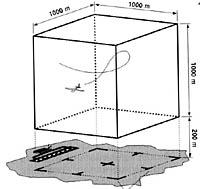
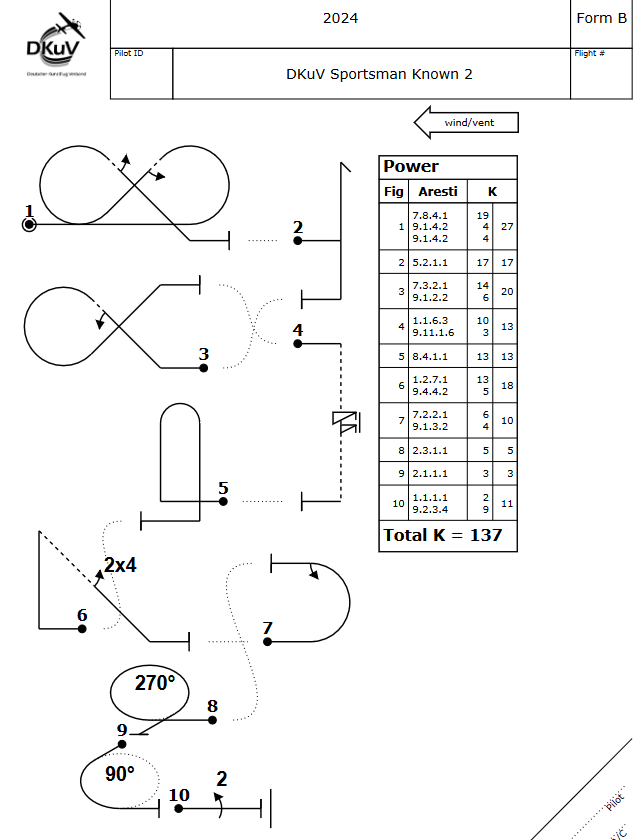
In the (entry-level) Sportsman category, competitors have to fly two known programmes and one unknown programme in front of a seven-member jury of experienced competition aerobatics judges. It is not only about flying each figure precisely, but also about positioning them well within the aerobatic box, which measures 1 km x 1 km x 1 km.
When you are flying through the box at more than 300 km/h, that space becomes very small very quickly. The judges want to move their heads as little as possible, so it is particularly important to fly the figures as close to their direct line of sight as you can, corrected for wind and for angle, which is not always easy.
The first known programme looks like this:
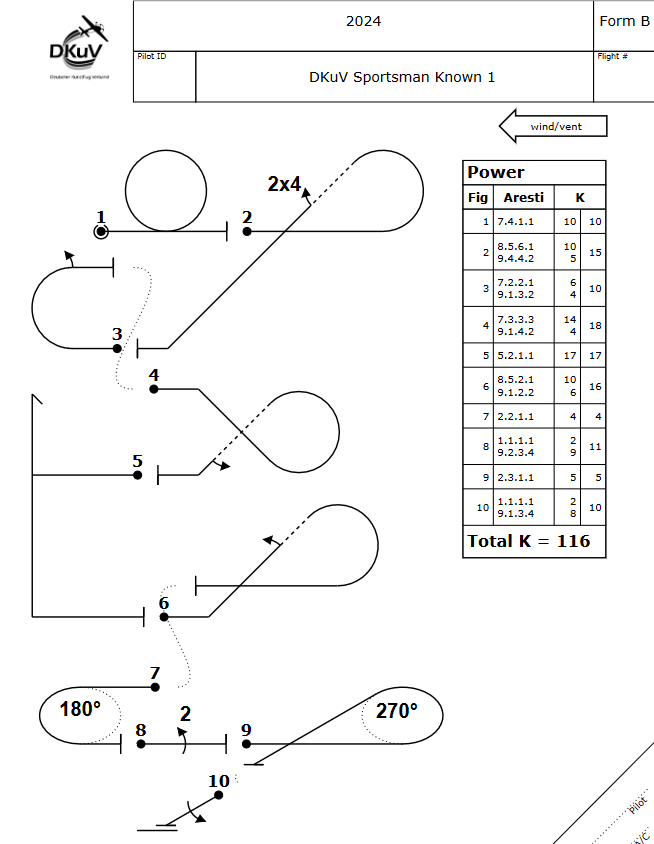
And the second one like this:
If you have the time and happen to be in the Brandenburg area, you are very welcome to come and watch the championship. A particular highlight will be the Unlimited Freestyle competition on Saturday before the award ceremony, in which the pilots of the top category show the judges and spectators everything they can do in a programme of their own design.
Link to the competition: https://www.kunstflugverband.de/wettbewerbe/
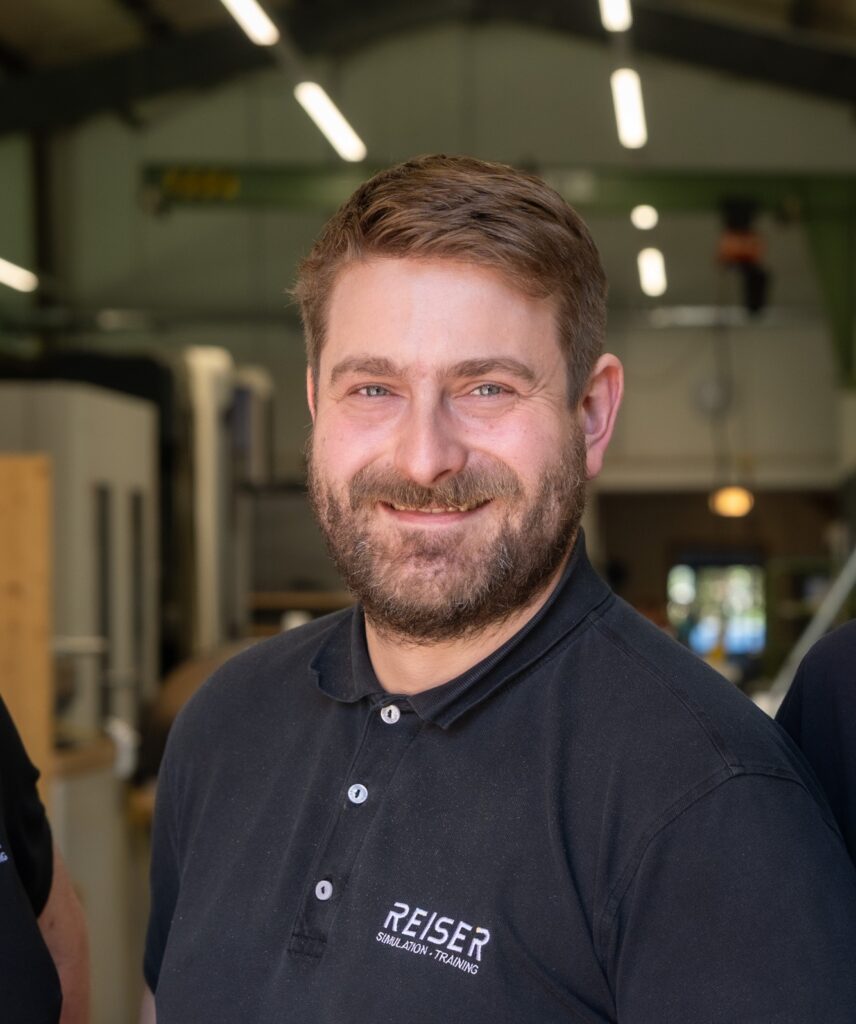
Update: Sebastian successfully flew his way to second place in the Sportsman category. Congratulations, and we are glad we could support him with the special leave we granted.