
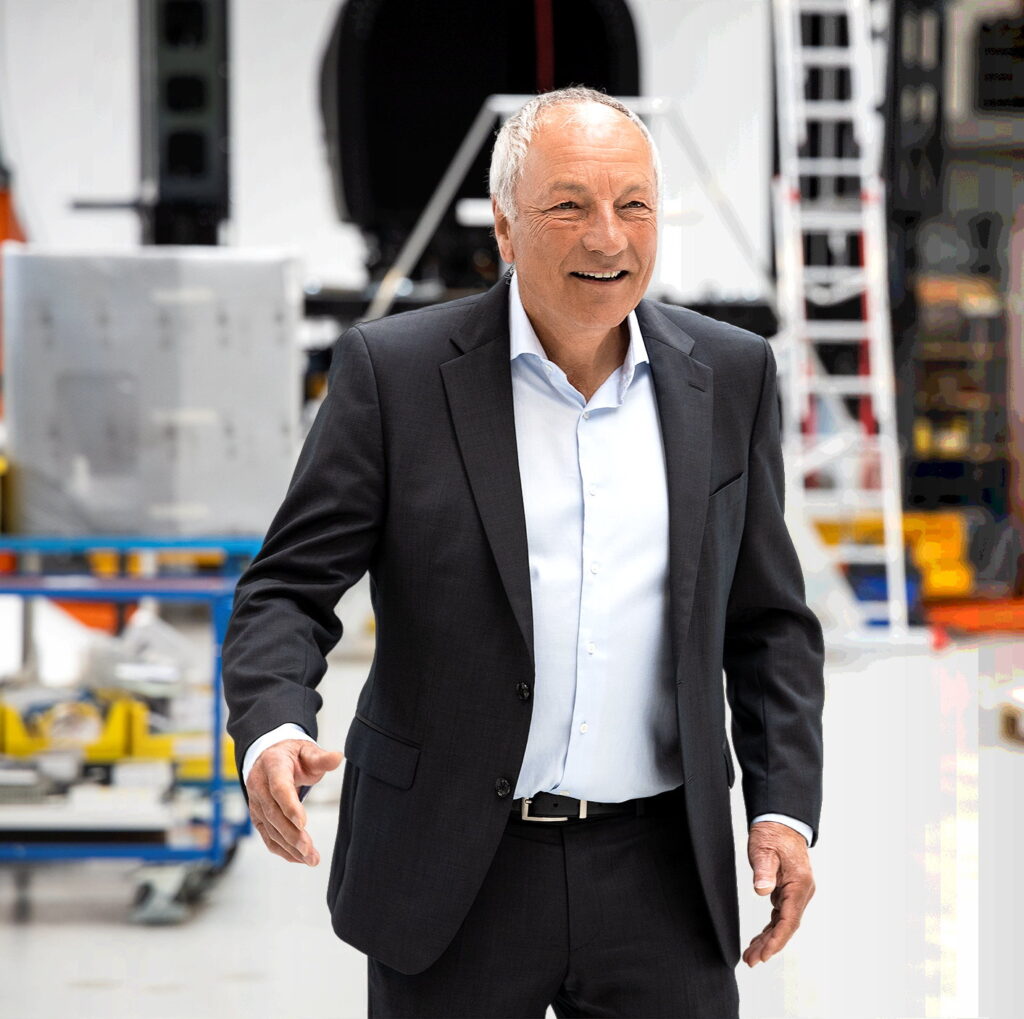
A founding story by Wolfgang Reiser
A new neighbour. A brief chat at the garden fence. And a suitcase full of electronics. At first, that was all it took for the next big step.
“We can do that,” said Wolfgang Reiser when his neighbour mentioned a special enclosure he needed for a new venture. A few days later the man was at the door with a suitcase. Inside lay the electronics. REISER built the enclosure.
That job created a contact in the world of Eurocopter, today Airbus. And that contact opened the door to a field that seemed almost out of reach for a small company at the time: aviation.
Normally, Wolfgang Reiser says looking back, a small supplier at a large aircraft manufacturer got no further than reception. REISER landed straight in the engineering department.
The suitcase was chance. The solution that came out of it was not.
1988
Going self-employed, from home
1
customer at the start: laser technology
7
employees before home became too small
200+
employees after the helicopter project, up from around 40
It began with a decision
Before REISER built enclosures for aviation systems, before there was any talk of cockpits, training devices or full-flight simulators, a far more personal question came first: should you give up a secure job in public service when you have just built a house, are married and have three small children?
Wolfgang Reiser decided to do it.
“Trading a secure job in public service for uncertain self-employment is hard, of course.”
Wolfgang Reiser
There was no finished business plan ahead of him, no large team, no established industrial network. He had no roots in industry. There was no fixed customer base.
At first there was exactly one customer: laser technology. Self-employment began in 1988, at home.
Seven employees and a home that was too small
Laser technology was growing strongly back then. That helped at the start. The first orders came in, and so did the first employees. Two became three, then four, five, six, seven. At some point, home was too small.
The chance to buy a property took the young company into its next phase. Working at home turned into a real business there. REISER continued to work specifically for laser technology and built an industrial foundation step by step.
It was not a spectacular founding moment with champagne and a press photo. More a series of small decisions: take an order, hire someone, make more room, solve the next task.
Then came the first major crisis.
1994: when the laser industry collapsed
In 1994 the laser industry came under massive pressure. The market collapsed, and REISER's business with it. For a young company that was existential. Shortly after the start, the question was already on the table whether it could go on at all.
Rescue came from a direction nobody had expected. Wolfgang Reiser met an engineer who designed plants for the chemical industry. He was looking for someone who could build the machines. REISER said yes.
With that, the company moved from electronics and electrical engineering into mechanical engineering. It built the machines to the engineer's documentation and developed the matching control system. “That was the first time we really came back to life,” Wolfgang Reiser recalls.
Laser technology carried on in parallel. When the market recovered, REISER had gained something that went beyond the individual order: new experience in mechanical engineering and the ability to think of electronics, control system and machine as one whole system.
Price pressure takes away the room to think
What followed was a phase of extreme price pressure. Suppliers were squeezed so hard that little was left for many of them. Wolfgang Reiser describes the situation in a sentence that has lost none of its edge decades later:
“The prices were too high to die on and too low to live on.”
Wolfgang Reiser
The problem was not only that the numbers were getting harder and harder to make work. Price pressure also takes away the room to think.
Anyone who only works through the backlog does not automatically develop the next solution. New ideas, technical improvements and in-house development then lack exactly what is needed most: time, money and breathing space.
That phase passed too. And once again the next step did not come from a perfectly prepared strategy, but from an encounter.
The neighbour with the suitcase
Wolfgang Reiser's new neighbour had started something new together with a partner. For it, he needed a special enclosure. An enclosure. Hardly the kind of order you would expect a major company story to grow from.
Yet a few days later the electronics were on the table in that suitcase. REISER built the enclosure, and with it gained access to a new field.
At Eurocopter, today Airbus, there was a technical problem at the time: many cockpits contained analogue displays, instruments and control panels. Connecting them to computers was difficult. Numerous components were faulty and could not simply be replaced.
For REISER that was not an entirely foreign world.
What old flight simulators have to do with new solutions
Before going self-employed, Wolfgang Reiser had maintained flight simulators for the German armed forces. Those were systems from a different technical era: analogue computers, potentiometers, valve technology and in some cases mechanical calculating units. Some systems literally computed with gearwheels.
That experience now became valuable. Wolfgang Reiser knew the logic of older systems. He knew why certain components failed, why spare parts were hard to find and what the limits of the old technology were. At the same time, REISER was able to develop new electronic solutions.
The past was not a detour. It became the toolbox for the future.
From cable harness to bus system
One example shows how concrete that transition was.
Before
Every switch had its own wire running from it. A single cockpit could therefore need enormous cable harnesses. The systems were complex, expensive and prone to failure.
With REISER
Microcontrollers and bus systems. Not every signal needs its own wire any more. The systems are networked, simpler in structure and easier to develop further.
A problem with analogue technology turned into a new system architecture.
Step by step, further tasks followed: devices, cockpits, training systems and projects in the Eurofighter environment.
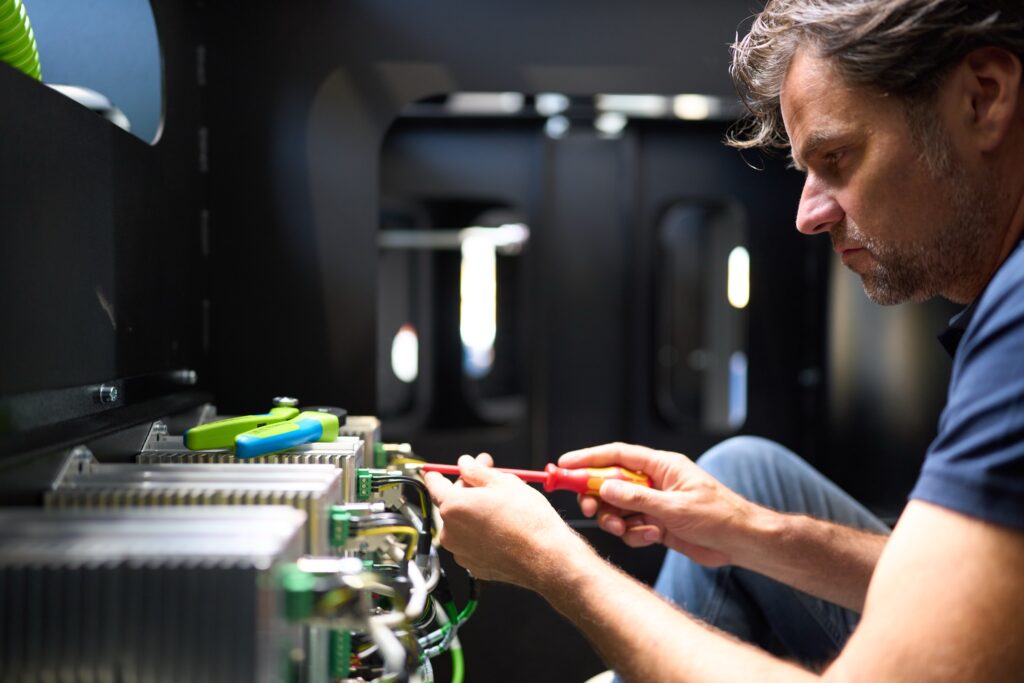
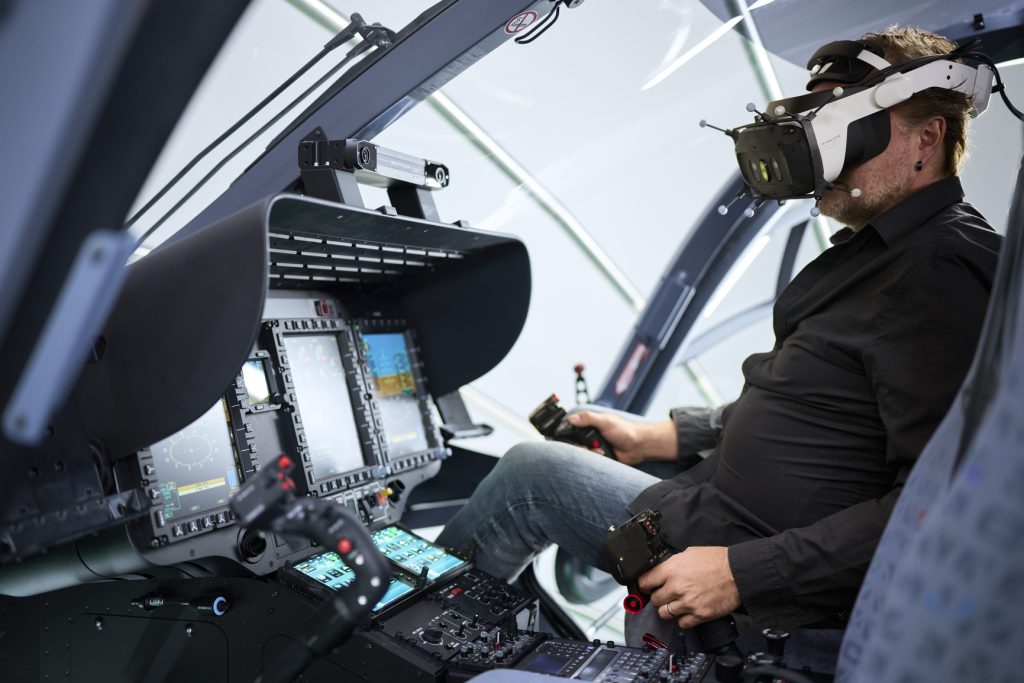
Electronics assembly at REISER today. The question of how many wires a cockpit really needs turned into a system architecture of its own.
When a finished project leads nowhere
In aviation, too, the road was not straight. REISER worked on a large project and had finished it when the underlying aircraft programme was stopped. The work was done. The programme ended all the same.
For the company that was a hard blow. Receivables had to be written off, and REISER had to reorient itself.
Then a different need arose in the Eurofighter environment: training solutions. Different requirements that did not fit together at first had to be brought into one working system. REISER developed that solution. It stayed on schedule and met the requirements.
That was an important step. Not because all uncertainty suddenly disappeared, but because it showed that REISER could still act when a project was cancelled and the original plan no longer applied.
Persevering did not mean holding on to the old project in that moment. It meant translating your own experience into a new task.
From 40 to more than 200 employees
The next major task led into the helicopter field, to training systems for maintenance and engineering. It started with a comprehensive study. That grew into a large project, and for REISER into a growth surge that changed everything.
The company grew from around 40 to more than 200 employees.
That is quickly told as a number. In reality it meant finding people. Creating workplaces. Building structures. Clarifying responsibilities. Connecting engineering, manufacturing, project work and organization.
The small company with its first orders became an organization able to develop and deliver complex systems. Growth was no longer just a matter of size. It became a matter of working together.
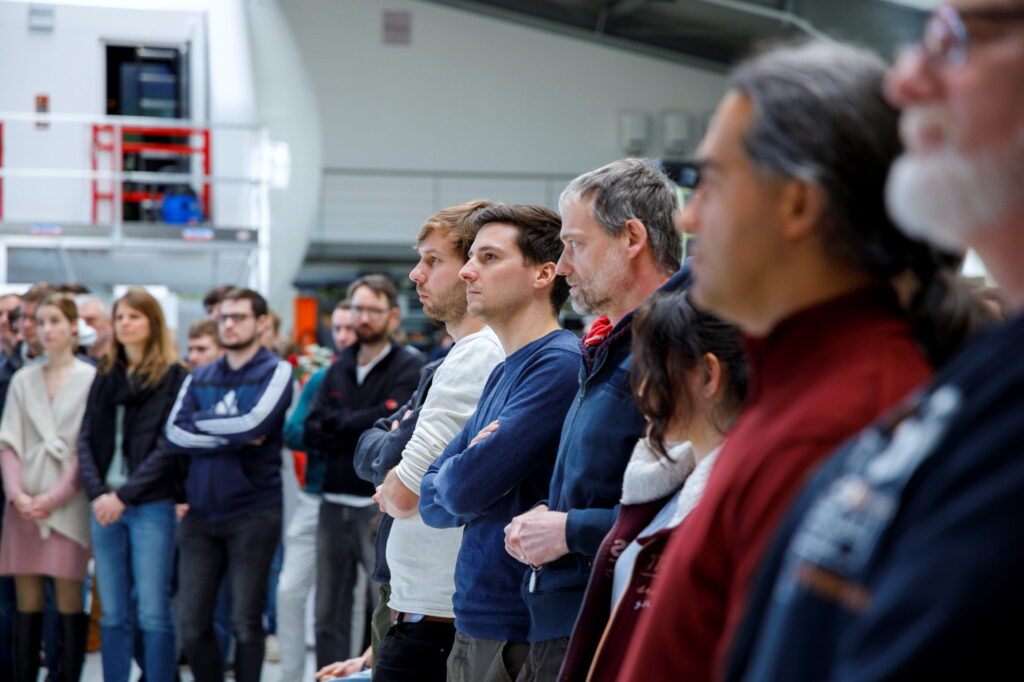
The company that started at home became an organization that develops and builds complex systems.
2007: many paths become one direction
In 2007 a clear decision was taken: REISER gave up laser technology entirely. Since then the company has focused on aviation, simulation and training.
In hindsight that decision looks logical. Many strands of experience came together in it: electronics, mechanical engineering, manufacturing, maintenance, system integration and dealing with old components that were no longer available.
But it was logical above all in hindsight. This direction had grown out of crises, coincidences and tasks that had not belonged to the original business at all.
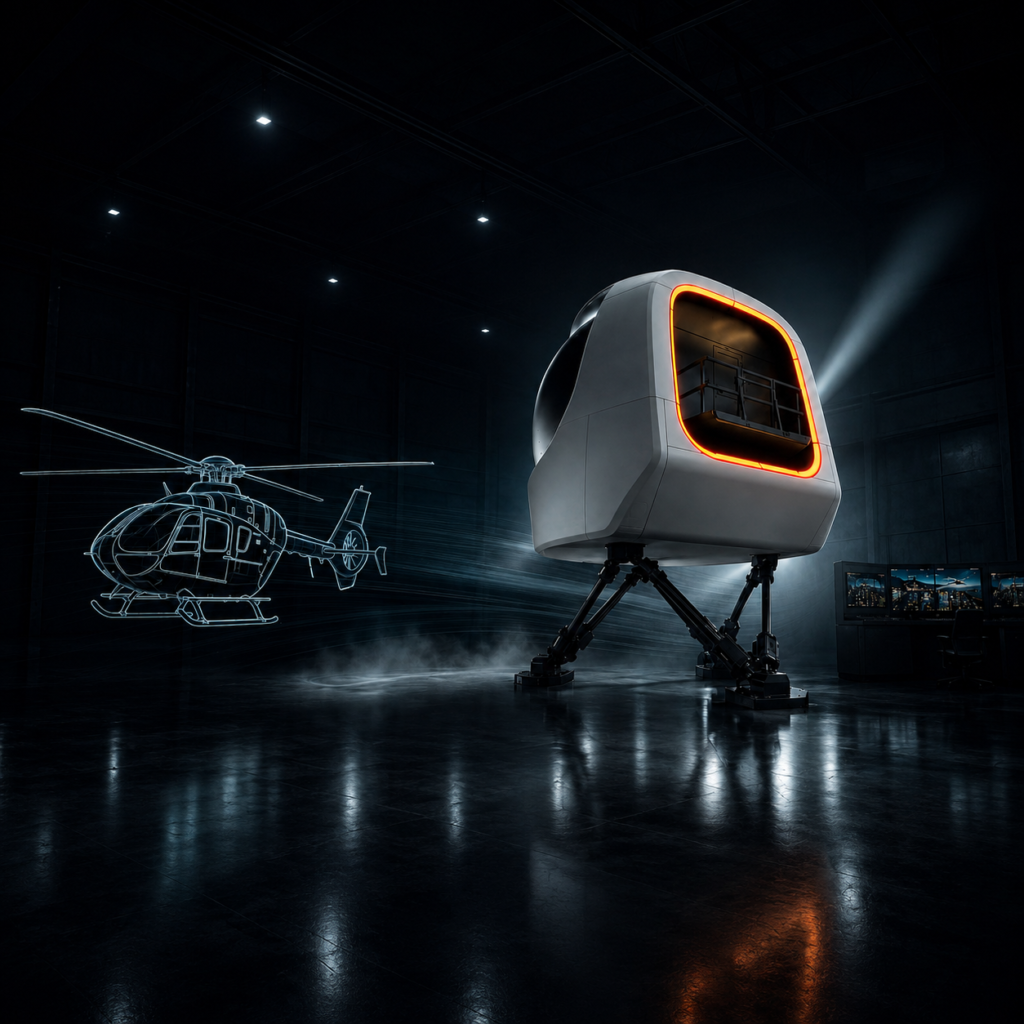
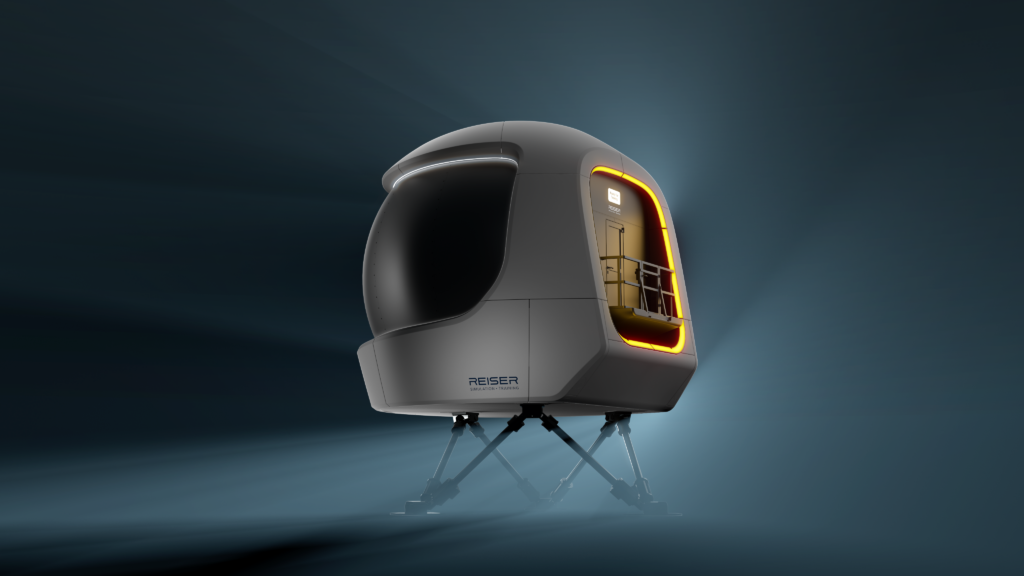
In the end REISER also began building complete simulators. One milestone was a full-flight simulator. Many things had to be developed and brought together in-house for it. Wolfgang Reiser describes the project as an adventure. In the end the system was certified.
No master plan. A pattern.
When Wolfgang Reiser tells the story of REISER, he does not speak of a straight-line plan.
He tells of a decision against security. Of one customer. Of seven employees at home. Of a market that collapsed. Of machines for the chemical industry. Of prices too high to die on and too low to live on. Of a neighbour with a suitcase. Of analogue computers, huge cable harnesses and new bus systems. Of a cancelled project and a new training solution.
At first that sounds like coincidence. But between these turning points a clear pattern emerges: REISER has again and again transferred existing knowledge to new tasks. Not every new direction was planned. But every one was taken seriously.
The question was not always what had originally been intended. More often it was: what can we solve now?
“You always have to decide whether you carry on. And we always carried on.”
Wolfgang Reiser
Today REISER works in simulation, training and software. The foundation for that was laid much earlier, in a small company that started at home, in difficult years, in technical detours and in the readiness to look for the next feasible step after every setback.
It was not the straight road that shaped REISER. It was the decision to keep going.
About the person
Role
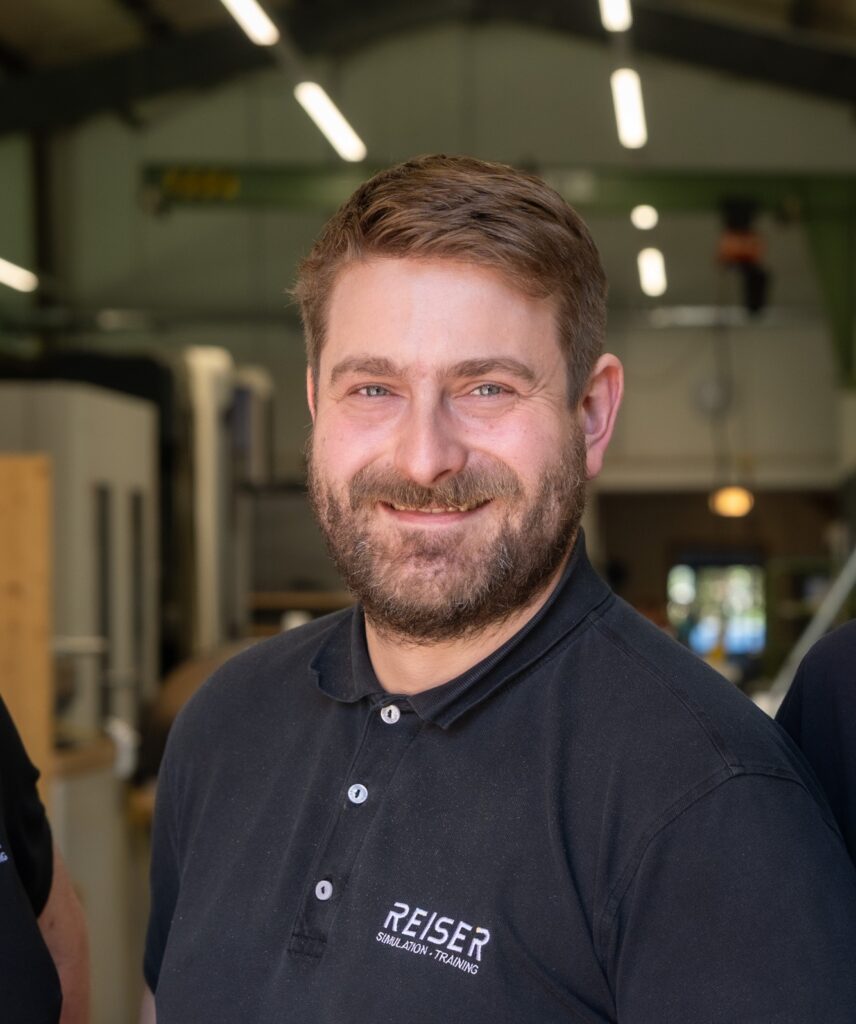
Founder of Reiser Simulation and Training
Self-employed since
1988
Before that
Maintaining flight simulators for the German armed forces
The company's focus today
Aviation, simulation and training
The road in stages
1988
The start at home
Wolfgang Reiser gives up public service and goes self-employed. One customer: laser technology.
Early years
Seven employees, own premises
Working at home turns into a company with an industrial foundation.
1994
The laser industry collapses
The move into mechanical engineering keeps the company alive: plants for the chemical industry, complete with their own control system.
After that
Years under price pressure
Financially tight, with little room for in-house development.
The suitcase
Entry into aviation
An enclosure for the neighbour opens up access to the world of Eurocopter, today Airbus.
Cockpit technology
From cable harness to bus system
Microcontrollers and bus systems replace analogue wiring. Devices, cockpits, training systems and projects in the Eurofighter environment follow.
Growth
From 40 to more than 200 employees
Training systems for maintenance and engineering in the helicopter field change the size of the company.
2007
One direction
Laser technology is given up, the focus is on aviation, simulation and training. A full-flight simulator follows later and is certified.